We should maintain that if an interpretation of any word in any religion leads to disharmony and does not positively further the welfare of the many, then such an interpretation is to be regarded as wrong; that is, against the will of God, or as the working of Satan or Mara.

Buddhadasa Bikkhu, a Thai Buddhist Monk


Showing posts with label Politics. Show all posts

Monday, March 3, 2014

The Limits of Dialogue?

In some religious circles, interfaith and intra-faith dialogue is considered to be a key way to mitigate the differences between people of different faiths and religions.  If only we listen to each other with open minds and hearts, so the thinking goes, we will break down the barriers of mistrust and misunderstanding between us.  The assumption subsuming this approach to religious reconciliation is that our differences arise out of mistrust and misunderstanding.

What, however, if our differences are at least partly genetic?  Recent research reported in a news posting entitled, "Twins study confirms genetic role in political belief," suggests that this may in fact be the case.  That study found that identical twins show a statistically significant congruence in political beliefs not shared by fraternal twins.  Given the close relationship between political and theological/religious views, it also suggests that our religious orientation as liberals, moderates, and conservatives may also be partly driven by our genetic heritage.  It has to be said that these findings are questioned by some other social scientists and nothing is nailed down or for surely certain.  The idea, based on earlier research, that political views are partly genetically driven was proposed some years previously and greeted with a good deal of criticism.  This latest study serves to reinforce the sense that those who think that genetics are part of politics may be on to something and a good deal more investigation is required.

The claim is not made our views on specific political issues are determined by our genetic heritage or even that our political philosophy is one hundred percent so determined.  Environment and personal experience play a role.  Conservative Hispanic voters, thus, may well vote for liberal Democrats because they represent views on the specific issue of immigration more nearly compatible with Hispanic concerns.  Still, the inclination is to be conservative, which inclination may have a genetic component.

If the same is true for our religious and theological views or inclinations, then our differences are not merely a matter of misunderstanding.  We are different.  Perhaps listening to each other in this case still has a purpose, but it may be a more limited one—still important, but less ambitious.  Instead of breaking down barriers, perhaps the role of dialogue is to put some windows in the walls between us so that we can better understand that the religious "other" is not insane, illogical, stupid, or devilish.  "I still don't see how you can think the way you do, but I do understand that you are not being perverse in how you think.  You have your reasons, as I do mine."  The goal of inter-religious dialogue, then, would not be mutual understanding so much as mutual respect.  That is still a worthy goal, just less ambitious—and maybe more realistic.

Wednesday, October 23, 2013

Both Divine Justice & Karma

Liberals may despise Cruz, but in one of those ironies common in politics, they know that right now he’s big government’s best friend. Democrats won’t utter the words out loud, but in their hearts they’re chanting, “Go, Ted, Go!” And in quiet moments, as they count their unearned blessings, they dare to dream their secret ally might be the next Republican nominee for president. 

Monday, October 21, 2013

The Kingdom We Work For

In a posting entitled, "What the Ruling Class Does Not Comprehend," conservative columnist Eric Cox engages in a postmortem of the recent government shutdown.  Reflecting what seems to be the growing sentiment on the Right and taking the long view of things, he is heartened rather than discouraged by the apparent defeat of conservatism this time around.  True conservatives, he argues, stand on the side of liberty and they will prevail.  He concludes, "Although a minor loss we did suffer, we will not have to endure many more, for liberty and the human spirit will not allow it."

There is another sentence in his posting, however, that is especially revealing of the fundamental tension that lies at the heart of the great debate taking place in America today over nature of our society.  Cox states, "Conservative values revolve around the concept of individual liberty."  On the face of it, that sounds benign enough, but as is true of every principle and value the devil is in the details.  For tens of millions of individuals one man's liberty is another woman's chains.  That is to say that individual liberty is fine so long as everyone shares in it, so long as everyone is free.  In fact, there is not a nation on the Earth in which everyone enjoys the same liberties as everyone else.  Only in the Kingdom will we all be free.

It is for these reasons that liberals have a different take on liberty.  Liberal values revolve around the concept of social justice.  Where there is no justice, there is no liberty.  Where there is only individual liberty without the constraints of social justice, some will always be deprived of liberty, which means ultimately we all are so deprived.

Now, of course, our conservative friends will respond, "Yes, but..." and make the point that social justice has ways of morphing into imposing unwarranted, oppressive constraints on individuals.  That is at least part of the reason why they fear Big Government so intensely, and they are not entirely wrong or unjustified in their concerns.  The point is that whether our values are centrally concerned with the individual or with society more largely the devil is still in the details.

What would be best is if we all could understand that individual liberty and social justice are two sides of the same coin.  The Big Government that the "individualists" fear and the "socialists" rely on is the one that has made it possible for an increasing number of people of color to find a better, safer, and more just in American society.  It has expanded the scope of individual liberty because it has (however imperfectly) been an agent for a more just American society.  The Affordable Care Act that is so deeply hated by the Right has as its ultimate aim the goal of expanding access to health care, that is expand the scope of individual and social well-being.  You can't have individual liberty without social justice just as society is only truly just when its individuals are truly free.

That is the Kingdom of God that we work for: a world that is free and fair.  Such a simple thing, such a seemingly impossible thing!

Saturday, October 5, 2013

Just Maybe "The System" Will Win

As we watch events on Capitol Hill with a mixture of disbelief and disgust, an important thing may be happening that is hopeful if tenuous.  From "out here" most of us can see that one key problem in Congress is the breakdown of a system of politics that basically works pretty well most of the time.  It is a process of give-and-take, deal-making, and compromise that is not perfect but still has served the republic reasonably well for a long time now.  Yes, it sometimes leads to corruption.  Important principles and values can get muddied.  On the other hand, it can also produce landmark legislation that changes and improves the lives of our citizens.  It is this process that has broken down in Washington, and while there are a number of factors at work and there is no such thing as an innocent politician, it is also clear that it is the take-no-prisoners intransigence of the tea party faction esp. in the House of Representatives that is driving the breakdown of "politics as usual" in Washington and other places in our nation.

In this context, a posting at Bloomberg.com entitled, "Tea Party’s Ross Says Debt Worth Yielding on Obamacare," could be important—at least one would hope so.  The posting quotes Rep. Dennis Ross (R-Florida) as admitting, "We’ve lost the CR [continuing resolution] battle...We need to move on and take whatever we can find in the debt limit."  Ross apparently still feels that there should be negotiations concerning the debt ceiling, which President Obama has said is not going to happen, but the change in his tone is what is important.  He has shifted from intransigence on the Affordable Care Act to what appears to be a more realistic position.  He is quoted as saying, "There are a whole lot of other issues that haunted us at the election other than Obamacare,” and, “I would hope there’s at least enough of us [Republicans] to constitute a majority of reasonable people that realize we need to give and take."

The tea party began just three years ago with the attitude that the time for compromise was at an end.  Washington had to be coerced into change.  The public at large, however, quickly grew sour on that approach to national politics, and we have already several times witnessed tea party politicians go down in flames because of their radical ideologically driven approach.  The reality of American politics with its many different perspectives, is forcing tea party politicians to learn that they can't get their way long-term unless they are willing to compromise with liberals, moderates, independents, and esp. other conservatives who aren't as right-wing as they are.  Ross apparently is learning that lesson even if others in his faction haven't yet done so.  That is hopeful, as far as it goes.  We desperately need a return to the politics practiced by "reasonable people."

Saturday, September 21, 2013

FDR's Long Shadow

In the 1930s, President Franklin D. Roosevelt introduced the American people to the welfare state as he sought to bring the nation out of the Great Depression.  The counter-intuitive economic principle was that we solve depressions at the national level by spending more not less.  The counter-intuitive social principle was that poverty is not a personal moral issue but, rather, a national moral issue.  The poor, as a class, are not poor because they are lazy (laziness being a quality we find in people of all classes).  The poor are poor because of a lack of opportunity and freedom.  FDR built his New Deal out of forces already at work in American society, but it was he who wove them into the welfare state.

The obvious thing is that large swatches of the American public still cannot or will not think counter-intuitively concerning economics and social classes.  They still believe that in hard economic times the nation must behave "rationally," that is pull in its belt just as any sane family would.  And they still believe that the poor are poor because they deserve to be poor.  Even among the poor, many simply do not accept the fundamental premises on which the welfare state is built.  It does not help matters that the welfare state is also a bureaucratic state and has inevitably introduced new forces of greed, injustice, waste, and just plain stupidity into our lives.  The thing is even in  its bureaucratic guise, it has also managed (until recently) to lift millions of people out of poverty and give them new lives and hope.  It has also employed many of those who have lived in poverty, thereby becoming a direct means of providing jobs for lower income folks.  Bureaucracy, like most things human, cuts both ways.  So does welfare.

Republicans and Democrats represent two sides to the ongoing debate over the welfare state and the bureaucratic state.  Both believe in the fundamental, central American value of personal freedom.  In a manner that is itself counter-intuitive each rightly presses its own "agenda" forward.  One seeks to maintain and even expand the welfare state so that all may be free.  The other seeks to limit and even reduce the welfare state so that all may be free.

The Tea Party introduces a note of discord.  It wants to kill the welfare state.  It has transformed "common sense" (cut spending in hard times & the poor deserve their poverty) into hard and fast ideology.  Tea Partiers want to end the debate and take us back to the golden summer of 1929.  However it all plays out, it is impossible to believe that we will go back.  FDR's shadow is too long.  So long as we remain a democracy, we will keep working at the task of balancing personal freedoms with social justice.  We will keep working on (as Democrats) and wrestling with (as Republicans) the New Deal, the Fair Deal, the New Frontier, and the Great Society.  Only when we cease to be a democracy will that fundamental debate of American society come to an end.

To the extent that the Tea Party seeks to bring the Great American Debate to an end, it is an anti-democratic force for repression.  That is not surprising.  As we listen to its voices what we hear is anger, fear, and a profound ignorance of how society actually works.

Friday, September 13, 2013

Weighing In On Syria

There really are times when the collective voices of our news media do our nation less service than we deserve—or, perhaps, speak too much for us rather than to us.  Over the last few weeks, we have watched President Obama wrestle with the painfully difficult issues surrounding the civil war in Syria and the use of chemical weapons by the Assad regime.  He is faced with a chess board on which the pieces are in constant motion, the rules uncertain, and some pieces hidden from view.  The media (and many politicians always on the lookout for political advantage) want bold decisive decisions today and immediate solutions immediately implemented.  They blame the uncertainty and chaos on the president.  They see him as weak and vacillating.

In response, the president has refused to make a decision that is not ready to be made.  He has involved the whole nation in the decision-making process.  He has eschewed cowboy diplomacy and action for the sake of action.  He has been wise enough to wait on events even while there has been a clamor for hasty, white horse & shining armor action.  His "performance" has perhaps not always been as spot-on as it could be, but in the midst of all of the angst  some wiser voices are pointing out that the president is accomplishing important things.  He has dialed back, at least slightly, the presidential tendency to make these hard decisions for us rather than with us.  He has created space for the unexpected, which actually may lead to a resolution of the chemical weapons issue without American military action.  He has been listening to public opinion with respect even though he disagrees with it.

We may may not see things the way President Obama does, and the course of events may not work out as he (or we) want; but he deserves our respect.  He is a man of peace who feels constrained to act against his instincts for peace but is unwilling to stray far from those instincts.  Those who demand that he give back his Nobel Peace Prize are simply not paying balanced attention.  He deserves it now more than ever.

Friday, March 8, 2013

The War Between the States - Round III

The Old South
About a month ago, Michael Lind published an insightful piece entitled, "The white South’s last defeat," subtitled, "Hysteria, aggression and gerrymandering are a fading demographic's last hope to maintain political control."  His thesis is that the real political divide in our nation today is not between right and left but, instead, between South and North.  The "Old South" (white, evangelical, & of British-American origins), Lind insists, has continued to exist down to the present and has successfully maintained political control of most of the states of the Confederacy.  Now, however, that dominance is increasingly threatened and has already been lost in Florida and Texas, which have become minority-majority states.  Other regions of the country have historically undergone this same process, and there was considerable political upheaval when they did.  Now, it is the South's turn.  Lind warns us that, "The demographic demise of the white South is going to be traumatic for the nation as a whole." He concludes, "But the old-stock Yankees in the Northeast and Midwest did not accept their diminished status in their own regions without decades of hysteria and aggression and political gerrymandering. The third and final defeat of the white South, its demographic defeat, is likely to be equally prolonged and turbulent. Fasten your seat belts." (The first two defeats of the white South were the Civil War and the civil rights movement).

If Lind is correct, his thesis suggests that we can look at the future in two related ways.  It looks like we should probably feel more pessimistic about the short-term and more optimistic about the long-term.  That's why we have seat belts—to keep us safe in dangerous times.  Let's just hope that our democratic institutions and habits of mind will be sufficiently strong to carry us through.  Amen.

Tuesday, March 5, 2013

Incarnational Politics

Political commentator Steve Kornacki recently posted an interview he did with former Speaker of the House Newt Gingrich entitled, "In the real world we were kidding ourselves."  The focus of the interview, obviously, was the results of the 2012 election and what they mean for the Republican Party.  Unlike many Republicans who are not willing to contemplate more than a cosmetic touch-up of their party, Gingrich argues that it must undergo substantial change.  In the course of the interview, Kornacki asked Gingrich, "When you look at the Republican Party’s relationship with African Americans and Hispanics, what is the message you want to deliver to those voters?" Gingrich answered by calling for the Republican Party to undergo "a big rethinking," a "very large fundamental rethinking." He then stated,
The first thing you have to do with African Americans, Latinos, and Asian-Americans and Native Americans is go there. They don’t need to come to you; you need to go to them. And when you go there, listen. Phase one is not going there to tell about you. Why is it we can have entire cities that are disasters, that we can have 500 people getting killed in Chicago, we can have Detroit collapsing, we can have the highest black unemployment teenage in modern history, and no Republican politician can figure out that going there to say, “Gee, shouldn’t we do something to make this better”? And then talk about it jointly, so it becomes a joint product — that it’s not “Let me re-explain conservatism.” I don’t mean to walk away from conservatism, but we need to understand conservatism in the context of people who are talking with us.
This is almost stunning stuff.  In effect, Gingrich is proposing what in theological circles we can only call an incarnational approach to the practice of politics.  In order to become a party of all the people, the Republican Party has to go to the people and not talk at them about conservative principles but listen to them regarding their lives and needs.  Go to listen.  Then, Gingrich proposes, the party has to work collaboratively with the people to address real life problems, such as gun violence in Chicago or the collapse of Detroit.  Finally, he urges conservative Republicans to understand their conservatism in the context of "people who are talking with us."  In short, he is calling for a politics that is dialogical, collaborative, and contextual.  Theologically speaking, he is proposing a Christ-like, incarnational politics.

Two thoughts.  First, we would all benefit immensely if the Republican Party, by some miracle, embraced this path of political renewal.  Gingrich is proposing a set of attitudes and cognitive habits that would influence the whole way the party approached politics—including the way it related to Democrats, women, the LGBT community, and foreign nations.  Imagine a political culture in which both parties behaved according to the incarnational principles espoused by Gingrich!

Second, but back in the real world it is impossible to imagine that such a thing could come to pass as long as the tea party-ist radical right continues to dominate Republican discourse and behavior, such as it does today.  The recent flap over CPAC's failure to invite Gov. Chris Christie (R-NJ) to speak (see here) is but one reminder of where vocal American conservatism seems to be today.  The radical right's vocal indictment of less right wing Republicans as being RINO (see here) is another.  Only to the extent that the Republican Party can isolate and reduce the influence of its radical, dualistic, our way or the highway wing will it have the opportunity to become what Gingrich envisions for it.

Still, the vision is a noble one.


Tuesday, February 5, 2013

The Choice of Our Times

In all of the major issues currently being debated in Congress and in the nation, our choice is not essentially between liberal and conservative answers to those questions. The choice we face, rather, is between a politics of engagement and one of imposition.  Engaged politics can be rough and tumble, but in the end it consciously works for solutions arrived it out of the engagement of many viewpoints in a process of give and take.  At its best engagement politics rests on mutual respect and shared concerns, no matter how differently expressed or even perceived those concerns might be.  Imposition politics is one-sided, ideological, and built on disdain. It appears to be the stronger of the two approaches, because it seems to be grounded on unbending principles and unalterable attitudes.  In fact, it totters uncertainly on the shifting sands of our worst political natures while engagement politics, for all of its uncertainties, tends to find solid ground in an underlying unity of purpose.  Engaged politics creates partners, however shaky their alliances might be, while imposition politics sparks intense, angry, and even bitter resistance.

The tea party, so called, represents one of the clearest expressions of imposition politics in recent American politics.  As such, it offers Americans an important opportunity to reaffirm our core shared commitment to a constitutional form of government built on engagement with each other regarding the great issues of our day.  Just as an infection can leave a body with enhanced antibodies, so resistance to the tea party movement could well strengthen our democracy and make us better practitioners of a more honest, open, and engaged politics.  Amen.

Friday, January 25, 2013

The Party of Christian America

The trend is deeply troubling and bodes ill for the future of the republic.  In Republican controlled states, we see a trend that attempts to effectively limit voting by minorities, gerrymander districts to maximize the vote of non-minorities, and now to manipulate the electoral vote to reduce the chances a Democrat can be elected by the new Democratic coalition of minorities and women.  All of this is being done quite openly and with one goal in mind: preserve, protect, and expand the power of the right wing of the Republican Party in the face of a fundamental demographic shift taking place in the U.S.

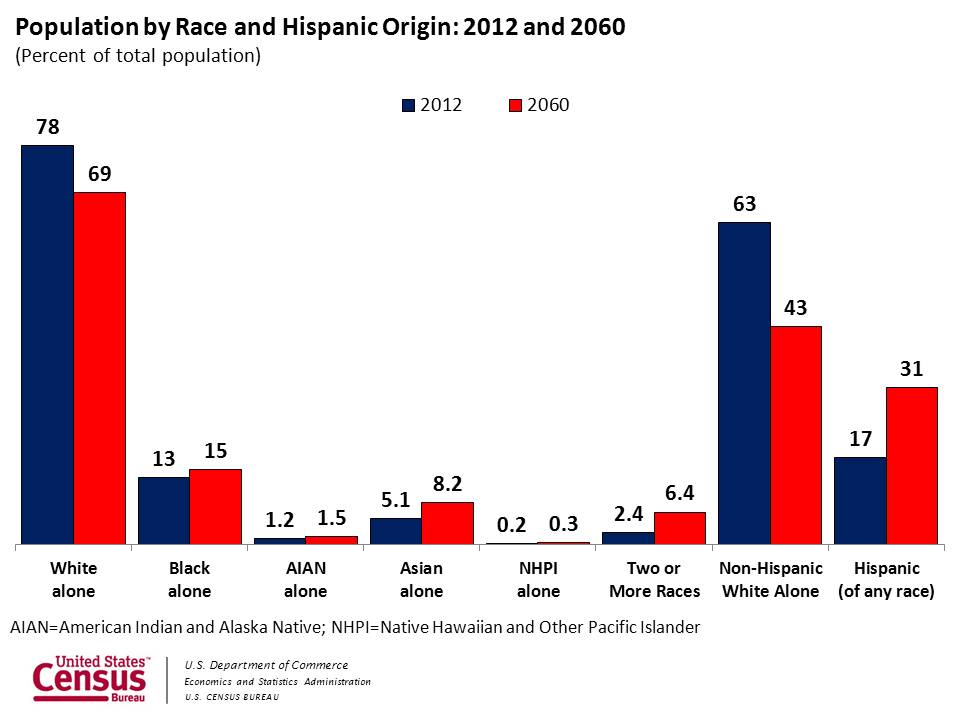
Within roughly 30 years, give or take, the U.S. will be a "majority minority" nation where "people of color" along with Hispanic Americans will comprise the majority of the nation.  The 2012 election has already demonstrated the growing political clout of the emerging minority majority, and it will only grow.  The U.S. Census Bureau observes (here) that, "The U.S. is projected to become a majority-minority nation for the first time in 2043. While the non-Hispanic white population will remain the largest single group, no group will make up a majority." It states that, "All in all, minorities, now 37 percent of the U.S. population, are projected to comprise 57 percent of the population in 2060. (Minorities consist of all but the single-race, non-Hispanic white population.) The total minority population would more than double, from 116.2 million to 241.3 million over the period."  White Americans will lose their status as the majority race in America but remain the largest single minority.  We will also be much less of a Christian nation than now.

In a nation where race still matters, this is scary stuff for a powerful segment of white society.  In effect, that fear has taken over the Republican Party, defining those who do not share in it as RINOs.  We could well rename this new, radical party of the right the "Christian America Party," although not all of its adherents are religious.

It seems inevitable that we are headed for a rocky ride over the next few decades as we collectively navigate the rapids of demographic change in a nation where demographic change matters.  It is to be hoped that our democratic institutions and sensibilities will weather the storms of this change and that we will find our way beyond the Christian America Party's desperate grab for permanent power.

As things stand now, it may succeed in stealing elections, but in the long run it is sealing its own fate.  Generations of Latinos, Asian Americans, and other ethnic-racial minorities will continue to learn what the overwhelming majority of black voters learned two generations ago, namely to vote Democratic as a matter of heritage and habit.  Unless CAP is able to totally corrupt our democratic system, the majority will win out, and the Democratic Party will come to dominant our political landscape in a way neither party does today.  This is not something that any of us should desire.  We desperately need a vigorous but reasonable conservative voice in American politics.  CAP is not that voice.

Wednesday, January 23, 2013

Will They Listen?

Gen. Powell
"I think the Republican Party right now is having an identity problem. And I’m still a Republican. I’m a Republican who grew up along with George Bush XLI. I grew up with Ronald Reagan, Cap Weinberger, Frank Carlucci, that Republican Party, the Republican Party of Dick Lugar and John Tower. But in recent years, there’s been a significant shift to the right and we have seen what that shift has produced, two losing presidential campaigns. I think what the Republican Party needs to do now is take a very hard look at itself and understand that the country has changed. The country is changing demographically. And if the Republican Party does not change along with that demographic, they’re going to be in trouble. And so, when we see that in one more generation, the minorities of America, African-Americans, Hispanic Americans, and Asian Americans will be the majority of the country, you can’t go around saying we don’t want to have a solid immigration policy. We’re going to dismiss the 47 percent. We are going to make it hard for these minorities to vote as they did in the last election. What did that produce? The court struck most of that down and most importantly, it caused people to turn out and stand in line because these Republicans were trying to keep us from voting. There’s also a dark-- a dark vein of intolerance in some parts of the Party. What do I mean by that? What I mean by that is they still sort of look down on minorities. How can I evidence that? When I see a former governor say that the president is shuckin’ and jivin’, that’s a racial era slave term. When I see another former governor after the president’s first debate where he didn’t do very well, says that the president was lazy. He didn’t say he was slow, he was tired, he didn’t do well, he said he was lazy. Now, it may not mean anything to most Americans but to those of us who are African-Americans, the second word is shiftless and then there’s a third word that goes along with it.  Birther, the whole Birther Movement. Why do senior Republican leaders tolerate this kind of discussion within the Party? I think the Party has to take a look at itself. It has to take a look at its responsibilities for health care. It has to take a look at immigration. It has to take a look at those less fortunate than us. The Party has gathered unto itself a reputation that it is the party of the rich. It is the party of lower taxes. But there are a lot of people who are lower down the food chain, the economic chain, who are also paying lots of taxes relative to their income and they need help. We need more education work being done in this country. We need a solid immigration policy. We have to look at climate change. There are a lot of things that the American people are expecting and the Republican Party, as they get ready for the next election, really has to focus on some of these issues and not ignore them. Everybody wants to talk about who’s going to be the candidate. You better think first about what’s the party they’re actually going to represent. If it’s just going to represent the far right-wing of the political spectrum, I think the Party is in difficulty. I’m a moderate but I’m still a Republican, that’s how I was raised. And until I voted for Mister Obama twice, I had voted for seven straight Republican presidents."

General Colin Powell, former Secretary of State
January 13, 2013

Tuesday, January 22, 2013

The Shadow of Slavery

Yesterday, January 21, 2013, President Obama delivered his second inaugural address to a crowd estimated at roughly one million souls.  Only time will tell whether or not it will become one of the better remembered inaugural addresses, but whether it stands the test of time or not it is a well-thought out testimony to enduring themes in our nation's life.  It is an articulate meditation on liberal values and a deft summary of the President's vision for the country and of his agenda for his second term.  It is worthy of our reflection and response—worthy of some quiet time reading and meditating.

Different ears will hear different things in the speech.  For me three words leapt from the text: equality, dignity, and change.  I could not but feel that the institution of chattel slavery cast its long, sad shadow across the speech and the day.  We are not shut of slavery nor of the racism that sustained it for more than two hundred brutal, bloody years.  The struggle for civil rights and economic justice suffuse nearly every paragraph of the President's speech, and undergirding them are three things that freedom-starved slaves longed for: equality, dignity, and change.  Racists of every generation including our own resist these same values, or rather reserve them for "their kind" and "their people."  The loathing that Mr. Obama has had to suffer through is a measure of the lingering voice of the slave holders who still, still, still cannot abide the freedom granted their former slaves by the Thirteenth Amendment to the Constitution.  The echoes of Dr. King in his address is the lingering voice of the descendants of slaves who themselves were still not free.  In the last fifty years, we have come a long way, but the President is correct.  No achievement is final, no victory is forever, and our journey is not complete so long as people of color, women, and gays have not achieved full equality and dignity.  Until that day, we must continue to seek change.

Most of us have been intensely disappointed by the politics practiced on Capitol Hill and in many of our state capitals since the election of President Obama in 2008.  It is painful to watch one of our two major parties, a pillar of our democracy, taken hostage by absolutist ideologues.  It has been sad to witness the President's honest attempts to enter into dialogue and cooperation slapped away in a manner that dripped with disdain and disrespect.  Birtherism is a stain on our national conscience, a reminder that equality and dignity are still being contested in our time.  We really do need to change.

That being said, it is also remarkable that we re-elected a "person of color" to a second term of office in spite of the obstacles thrown in his way by those who calculated that they could bring him down by practicing the "politics of 'no'."  It is remarkable that a descendant of slaves stood before us yesterday and called on us to continue the journey.  Slavery still casts its long shadow across our nation, but it is a shadow.  And, as I think about it, perhaps in our generation we are more blessed than harmed by that shadow because it has forced us to see that equality is something that we must grant not just to light-skinned straight men.  Mr. Obama began his address by recalling the Declaration of Independence's bold proclamation that, "We hold these truths to be self-evident, that all men are created equal, that they are endowed by their Creator with certain unalienable rights, that among these are Life, Liberty, and the pursuit of Happiness."  They are also the unalienable rights of women, gays, Muslim Americans, and immigrants from Latin America.  They are also the rights of children who suffer abuse and families that struggle to make ends meet.  Equality.  Dignity.  Change.

Perhaps, just perhaps, lurking within the shadow of slavery is the Spirit working, working, working for the Kingdom.  Our faith encourages us to believe it is so.  Amen.


Friday, January 11, 2013

Dialogue, Listening, & Politics Revisited

"Political Dialogue"
Anderzej Dudzinski
Immediately after the election back in November, I argued the thesis (here) that in order for our politics to improve politicians need to learn the art of dialogue.  I defined dialogue as an exercise in listening before speaking in order to understand the partner.  It is based on humility and mutual respect, and its goal is the making of peace. The question I posed for Congress was whether or not "it can discover a politics of dialogue."

Now, I understand that this sounds naïve given the reality of early 21st century American politics, especially on Capitol Hill, but I don't think it is.  John Ward has recently written an article entitled, "Republican Party Path Back From 2012 Election Requires Shift In Culture, Not Just Tactics," which puts forward the thesis that the reason the Obama team proved so effective in the last election was because it cultivated the art of listening.  He contrasts this approach to politics with the Romney campaign, which talked at the public without any attempt to listen to it.  Ward concludes, "In the end, the Obama crew wedded astute listening to a magnificent ground game built on technology and data, completely outclassing the Romney campaign by increasing turnout, particularly among minorities and youth, in key swing states."

In other words, the Obama folks practiced the politics of dialogue.  They listened before they spoke.  The cynical come back, of course, is that they listened only so they could be more persuasive in their presentations.  That, undoubtedly, is true.  On the other hand, those who cultivate listening skills cannot go unaffected by what they hear.  Listening, if it really is listening, is an other-oriented skill that will not leave the practitioner unchanged.  Or, to put that more positively, those who practice listening will be changed by what they hear, and what they say will be affected by what they hear.  That is dialogue, or at least the beginnings of dialogue.

The point to be made here is that dialogue is a spiritual discipline.  When we practice dialogue rather than debate or discuss issues, we bring ourselves just a little closer to being what God is creating us to be.  From a strictly Christian theological perspective, it may be said that dialogue is a Spirit-infested exercise in peacemaking.  It is inspired human listening and speaking—even when practiced for political gain.  There is such a thing as good politics, and dialogical listening is the foundation on which that politics rests.  Amen.

Saturday, December 8, 2012

"Lincoln": Highly Recommended

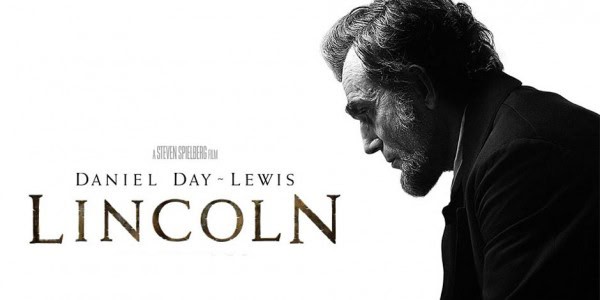
Yesterday, we spent part of my day off in the nearby "metropolis" of Watertown, NY, taking in the movie, "Lincoln," directed by Steven Spielberg and featuring Daniel Day-Lewis as President Lincoln.  It is a moving, powerful film, especially considering that it is ostensibly about the sordid business of politics in Washington.  I don't want to do a review here, and if you're interested you can find plenty of them at Rotten Tomatoes.  I do have a couple of thoughts, however.

First, part of the power of the film is in the story it tells about the past, and part of the power in the film is the obvious relevance that story has for us.  Good history is always as much as about the present as it is the past, and this is good history (good history opens the past up for us in a way that is true to the times it describes).  "Lincoln" is, thus, is a meaningful story that speaks to our experience.  It is a parable.  The messy, sordid politics of 1865 is, if in a different way, the messy, ideologically-driven politics of our day.  Spielberg particularly zooms in on the role of Thaddeus Stevens (played by Tommy Lee Jones), one of the most ideological congressmen of his day, and in a dramatic moment shows Stevens caught up in the throes of having to compromise his principles for the sake of realizing them.  The movie makes far more dramatically and effectively the point that I sought to make about compromising principles in a posting a couple of days ago (here).

A second thought (inevitably theological): understanding the work of the Spirit in our personal lives and in the course of the history of our human race is, at best, befuddling.  It rests on faith and intuition.  Still, one can't help but sense the subterranean, persistent work of the Spirit in the life of Abraham Lincoln and the politics of his day as he pushed for the passing of the Thirteenth Amendment  ("Section 1. Neither slavery nor involuntary servitude, except as a punishment for crime whereof the party shall have been duly convicted, shall exist within the United States, or any place subject to their jurisdiction. Section 2. Congress shall have power to enforce this article by appropriate legislation.").  This amendment is the embodiment of justice, and it lies at the very bedrock of our social contract as a nation.  One could almost see in the tug of the Spirit pulling on certain political characters portrayed on the screen so aptly.

We passed the Thirteenth Amendment, but the Spirit worked in Lincoln and others to make it possible.  Amen.

Thursday, December 6, 2012

Compromising Our Principles

In a democracy, government runs on compromise (or, seeking a "meeting of the minds" if one just can't accept the word "compromise" as a word).  One cannot govern if one cannot compromise—in a democracy.  There is a word for government not based on compromise: dictatorship.  The real political struggle in our nation today is not between conservatives and liberals.  It is between those who are willing to compromise and those who are not.  When a politician or a political party is not willing to affirm the fundamental significance of compromise, we need to vote that politicians out of office asap.  She or he is dangerous to our fundamental democratic values, which is majority rule built on respect for and protection of minority concerns.

A certain class of American politicians insist that they cannot and will not compromise their principles even for the greater good.  They will, for example, insist that raising taxes under any circumstances violates their principles, and they will not consider even the most modest increase.  In the political environment we the electorate handed them with the November 2012 election, the tax raisers are in ascendence, and if we are to move forward as a nation the tax deniers (some, at least) are going to have to learn the art of compromising their principles.

Compromise, in this sense, means understanding that even our most deeply held principles are still human ones, not ultimate and sometimes downright wrong-headed.  Compromise means accepting the fact that the contradictory principles of others, held with the same conviction we hold ours,  are worth hearing, considering, and sometimes bowing to as we seek to keep the "ship of state" sailing in a good direction.  Principles that cannot be compromised have become ideological and, theologically speaking, idolatrous.  Those who insist that their principles are absolute should be immediately disqualified from holding political office in a democracy.  A willingness to compromise one's principles, when pushed to the necessity of having to do so for the sake of the common good, is an indication that one's principles are truly principled.  It is those who place their principles above the common good that are most likely to behave in unprincipled ways.  In a democracy, government runs on compromise.

Tuesday, November 27, 2012

Let's Get A Divorce

One of Rom Phra Khun's regular readers dropped me an email recently alerting me to an editorial in the Minneapolis Star Tribune entitled, "A red-state, blue-state divorce plan."  It's all tongue-in-cheek good fun  (well, maybe not all in good fun, but mostly).  It is also, admittedly, one-sided, but there seems to be a lot of that going around these days, and maybe the message within the message is that we really do need to find a way to get along better than we are now.  You might want to "check it out."

Wednesday, November 14, 2012

Statistical State of the Nation

For a fascinating statistical portrait of American politics in November 2012, see CNN's exit polls data (here), gathered from 26,565 respondents.  The data not only describes who voted for whom but also the views of the respondents on a variety of current political topics.  For example, 26% of the respondents agreed that they are white born again Christians, 74% disagreed.  Some 21% agreed that they support the tea party movement while 30% disagreed.  The same data is available for each state.  In New York, thus, only 8% of the respondents agreed that they are white born again Christians, and only 16% agreed that they support the tea party while 39% disagreed.  The data reveals the relative balance between liberal, moderates, and conservatives, income distributions, and so forth through a truck load of categories.  It's worth a look.

Monday, November 12, 2012

Theology & American Politics Today (ii)

Picking up from the last posting, the focus of much of the political commentary since last Tuesday has been on the Republican Party.  How will it respond to its losses, which were serious and totally unexpected by party leaders, pundits, and faithful?  There is the hope that it will learn its lesson and shift back to the center at least enough so that it can advocate a less abrasive and radical conservatism.  There is the fear that it can't and that we will continue to be plagued by asymmetrical politics.  Stated theologically, there is the hope that the party will learn the lessons of idolatry and will move away from the hardline ideology in which is has been mired for some years now.  The statement, "This is not your grandparents' Republican Party," reflects the reality of how far to the hard right the party has fallen. The predominant portion worships uncritically at the feet of Conservatism.  The religious fundamentalism of the Evangelical Right gives this idolatry a religious fervor, one of the key marks of idolatry being the worship of a false idol.  The racial fear of people of color, the Other so potently symbolized by President Obama, is an idol in itself and powerfully contributes to the Idol of Conservatism worshipped by the dominant wing of today's Republican Party.

Much of the Republican Party appears to live in a bubble because it does live in a bubble.  Its faithful live in an alternative reality where their hard right version of conservatism fed by religious fundamentalism and white racism is god-like, and the god their religious wing preaches is a piece of their idolatry.  The Republican Party was not like this in the past.  The Democratic Party, for all of its obvious flaws, is not like this today, although the possibility that it could be is always with us.  Inside the bubble of right wing idolatry, the president is an anti-christ figure.  He is not the legitimate president.  He is a Muslim born in Kenya.  He is a socialist who doesn't understand how the "real" America works.  He is incompetent and lazy (meaning, of course, he is a person of color).  His followers are ignoramuses or only interested in living off the government "teat"—"they" just want "stuff" (meaning, of course, they too are people of color).  Thus, the 2012 election's results are mind-boggling to the idolatrous hardcore Right that is so powerful in the Republican Party.  Its faithful are fervently convinced that the real America of their forefathers is dying.

Idolatry is always insidious and always carries its own judgment.  The political ideology that infects a powerful wing of the Republican Party cannot be sustained in the long run.  As a form of idolatry, it is self-defeating and self-destructive.  The thing that is not comforting is that idols fall hard and in the process cause significant collateral damage.  What could happen is that the hard right wing of the Republican Party will refuse to budge politically or practice compromise, and the demographic realities of 21st century America will inexorably squeeze it into a smaller and smaller space until eventually it will become irrelevant.  But the process will take time.  Each election cycle the Republican Party as it is today will shrivel a little more.  As some have already observed, Virginia, Florida, Nevada, Colorado, and Ohio will become solid blue states.  The new swing states will be places like Texas, Arizona, and Georgia.  The electoral college math suggests that it will become harder and harder for a Republican to win the presidency.  The Congress will eventually become lopsided with Democrats.  And the real debate in American politics will be between liberal and conservative blue dog Democrats with a rump Republican Party sometimes allying itself with the blue dogs.

Or, perhaps, the Republican Party can shake the party loose from its idolatry, and we can return to true, fruitful two party politics.  This could well happen.  Certainly, right now there is a sense that the Republicans could loosen up their doctrine of "new no taxes" and could accept some kind of meaningful immigration reform measure.  Some powerful Republicans, at least, heard the message that the public is tired of all the fighting and wants a Washington that works effectively and cooperatively.  This second scenario is preferable, but given where the party is today not certain.  Idols fall hard.  Their faithful will not, cannot live outside the bubble.  They cannot compromise their principles.  They honestly believe that their  political opponents are inherently evil.  And the realities of 21st century America will eventually bring their god crashing down, but it will take time and there will be a good deal of damage done to the very fabric of our nation.

The matter hangs in the balance.  Idols are powerful, and a wing of the Republican Party will not learn the lessons of defeat.  They will continue to live inside the bubble, and their intransigence threatens the whole party with decline and eventual irrelevance on the national scene.  There is another wing, however, that can live outside of the bubble and learn the hard lessons of last Tuesday.  The key is compromise and humility.  Real-world politics requires compromise and a pinch of humility.  If the Republican Party can shake itself free of doctrinaire politics ("no new taxes" politics), it can reverse the otherwise inevitable demographic decline that threatens it today—if.  But, we should never forget that idols fall hard.

Saturday, November 10, 2012

Theology & American Politics Today (i)

As the pundits and politicians assess the aftermath of last Tuesday's elections, the pieces of analysis that they will miss are theological.  They wouldn't be interested or impressed even if they had an inkling that such an analysis exists.  Still,  it is worth our time here to engage in a little theological reflection and prognostication regarding our nation's current situation and future prospects.

In doing so, a couple of theological principles are relevant.  The first is divine judgment.  From the perspective of evolutionary theology, God's judgment is built into the very fabric of what it means to be human.  One might even liken it, spiritually, to gravity.  It is what it is and cannot be challenged let alone abrogated.  Divine judgment dictates that actions have consequences that reflect the action itself.  Thus good actions breed good consequences and evil actions are their own "reward."  At the micro level, this law is very messy and involves a lot of "collateral damage" because others suffer for the wrongs we do, just as others benefit from the good we do.  The second theological principle at work is idolatry, which is closely allied with divine judgment.  Idolatry is the worship of anything that is not worthy of worship.  In our day and age, false ideologies are one of the most common forms of idolatry.  Idolatry is powerful, insidious, and ultimately destructive of the idolater, but again with "collateral damage" as others are adversely affected by the passion and failed actions of those engaged in false worship.  Addictions can be considered forms of idolatry, the false worship of pleasure.

 Judgement and idolatry are two key doctrines of the Christian faith.  They are also important tools for the analysis of the current state of American politics and the nation.  Let me save the hows, whys, and therefores for a second posting, probably tomorrow.


Thursday, November 8, 2012

The Politics of Dialogue

"Political Dialogue"
Anderzej Dudzinski
In the wake of Tuesday's election, the initial signs of what's coming next in Washington are mixed and uncertain.  The raise a couple of important questions.  Will the liberals headed to or headed back to D.C. learn a modicum of moderation and not over-interpret their "mandate," which doesn't seem to be a mandate to be liberal fundamentalists?  Will esp. the tea party radicals learn the true art of politics, namely compromise for the sake of the common good?  There are some sound bites coming out of House Republicans that suggest that "seeking common ground" is now possible.  There are others that seem to be saying, "We won, too, which means our mandate to resist compromise in all forms has been reaffirmed by our constituents."

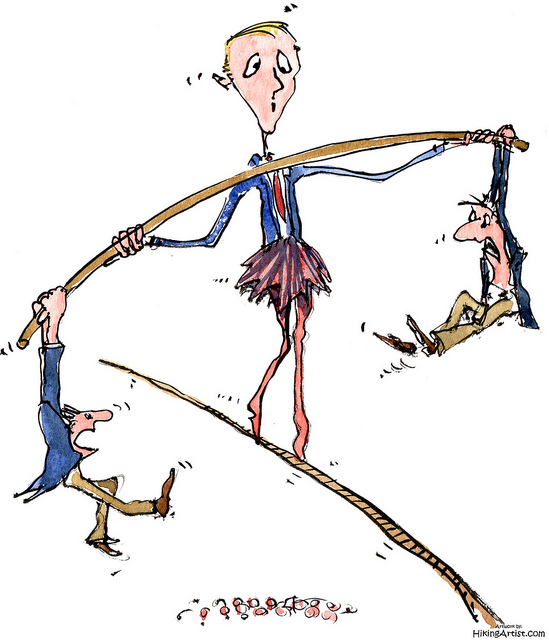
In religious circles, there is n important spiritual discipline called "dialogue."  Dialogue is an exercise in listening before speaking that seeks deeper understanding of the dialogue partner's faith.  It is a spiritual exercise in peacemaking.  Dialogue requires humility and respect.  It also requires a critical mind and heart, which listen critically to one's own words as well the words of the partner.  Dialogue is the true opposite of debate.  Dialogue is thus not a search for common ground per se.  It is only a search for deeper understanding that balances self-interest with other-interest where debate is a clash of two opposing self-interests.  In debate, one listens to discover the weaknesses of one's opponent.  In dialogue, one listens to discover oneself in the spirituality of another.  In dialogue, we are always the student first and maybe a modest teacher later—maybe.  Dialogue is not give and take; it is give and receive.

That being said, the crucial question for the Congress of the United States from this day forward is whether or not it can discover a politics of dialogue.  Can it, at least, move slightly in that direction?  Can esp. the tea party fundamentalists discover the essential dialogical truths of politics that the common good trumps ideological purity and that compromise is a good thing when practiced with integrity and a concern for that common good?  Those are dialogical values.  They are also good politics.  Good politics requires some degree of humility and a modicum of willingness to listen, really seriously listen to the way one's political opponent loves America and wants to serve the nation.  Modest liberals, moderates, and conservatives come equipped with dialogical attitudes—or, at least, there is a decent chance they come so equipped.  Fundamentalists of all stripes do not.  In the Congress today, the scale is tipped heavily toward right-wing fundamentalists who worship at the feet of ideological purity.  In their purity, they show open disdain for the practice of good politics and and their opponents.  The gridlock in Washington will be broken only to the extent that these fundamentalists learn at least a little of the spiritual discipline of dialogue.  Amen.