The 11 minute video clip below, "Honor Harger: A history of the universe in sound," is a fascinating introduction into the sounds of the universe. Honor Hager, originally from New Zealand, is the Artistic Director Lighthouse, "a digital culture agency" based in Brighton, England, that supports, commissions and exhibits work by artists and filmmakers. If you do meditations and/or prayers of any sort, this clip is worthy of inclusion. Be sure and stay to the end, which is the best moment of all. Enjoy!
Showing posts with label Universe. Show all posts
Showing posts with label Universe. Show all posts
Saturday, February 23, 2013
Wednesday, January 16, 2013
Impossible to Believe

That being said, it is impossible to believe that Earth is the only planet on which life lives. It is impossible to believe that we are the only intelligent species in all of that Great Expanse. So great is the size of the Universe that we may never meet another intelligent species, but it wouldn't be wise to be on it. And it is impossible to believe that the God of traditional thinking is real or could be the creator of the Universe. The God of the Bible is inevitably too tiny because "he" is only as large as the imagination of ancient peoples who lived in a tiny, tiny Earth-centered little bitty universe hardly larger than Earth itself. The Creator God of the Bible is a God of immense but imaginable power while the Creator God of the Universe necessarily stands outside of time, space, and all imagining.
A crucial task of theology today is to catch up with our modern knowledge of the reality of the Universe. Astronomy and quantum physics are key sources of revelation about the nature of God the Beyond. Biology, meanwhile, provides insights into the evolutionary ways of God the Beyond that bring us back to the Presence of God in our teeny tiny little lives. In light of all of this, we have to recalibrate our understanding of the person of Christ and the meaning of Incarnation. What exciting times we live in! and scary.

Wednesday, December 19, 2012
The Simulation Argument: Weird
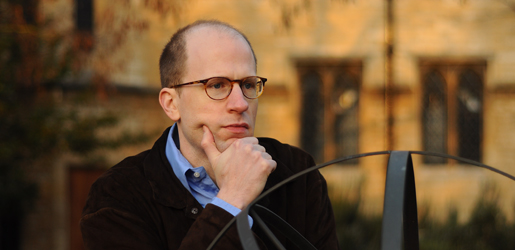 |
| Prof. Nick Bostrom
source: www.nickbostrom.com
|
The argument is taken seriously enough that physicists have been investigating it and some argue (see here) that they have evidence that we do in fact live within a computer simulation (we're talkin' a mammoth sized computer here!), and there is now a team of researchers who claim they have ways to test the simulation argument (see here).
A couple of points in all of this rise to the surface: first, even if we are living in a computer simulation, our world is still real to us. Second, the whole argument raises important theological issues and possibilities. For example, heaven and hell could be programmed into our reality by the simulator, whoever that might be. Indeed, the simulator becomes a prime candidate for God, the One who Created All That Is (to us). This would certainly explain why we live in a universe that is perfectly fitted to our human existence, which we do.
One argument goes that we may know whether or not we are living in a simulation sometime around the year 2050 when we ourselves develop computers large enough to create whole-universe simulations. It could be that our creator will then terminate our simulation because there is not enough computing power in the megacomputer we "live" in to support a simulation within a simulation. At that point, we will presumably wink out of existence. The Mayans were right! They just got the date wrong!
I'm not even sure what to do with this. Evidently, some very smart people take the simulation seriously. But, should we take them seriously? Weird.
Wednesday, August 3, 2011
God & Reality (II)
Following on the previous post, "God & Reality (I):
 Leaving agnostics and atheists to go their separate ways, people of faith are bound to find the analysis in the previous post dissatisfying. We believe that God is real and engaged with reality as we know it. Different religions describe the nature of God and of God's relationship to the world in different ways, but the consensus is that in one form or another we can know God. While Buddhism, for example, is often thought of as a non-theistic religion, some Buddhist thinkers acknowledge that the Dharma can be thought of as "God," just so long as God is not conceived of as being a person.
We Christians base our affirmation of the reality of God primarily on experiences with the divine. The central experience is with Jesus, which is both historical and contemporary. Some 2,000 years ago, the founders of our faith had a mind-blowing, life-changing experience with Jesus that we are still trying to wrap our heads around. Later generations have shared in that experience in their own lives. Building on the Bible, we affirm that at the very core of it all, we experience God as love. Christians in different ages, cultures, traditions, sects, and denominations have understood the love of God in different ways, given different interpretations and emphases to that love, but we share across the boundaries of our many Christianities the common sense that God is love, and we experience that love in Christ.
This brings us to a third way of talking about God. We can speak of God in the abstract as "ultimate being." We can affirm the living Lord as "love". And we understand God as creator of all of reality. The Old Testament affirms from the get-go that God in the beginning created the heavens and the earth. In the evolution of their faith, the Hebrew people learned that their God was not a tribal god whose throne was in the temple in Jerusalem. God's throne, instead, stood at the peak of the created universe, heaven, and the whole of the world was God's footstool. In the tiny universe of the ancient world, this was as universal a view of God as was possible. It took our understanding of God to a new level. It transformed God's "kingship" and "kingdom" into something Beyond any human conception of God—even concepts such as "Lord" of the Universe.
God as the creator who encompasses all of reality takes us back to the neutral, abstract idea that God is ultimate reality but with one crucial difference. We do not know what the relationship of ultimate reality is to mundane reality. When we claim that God created the universe, we also necessarily claim that we can know certain things about God through the study of the universe, God's creation. The universe reflects and therefore reveals something of the nature of God. The abstract notion of God as ultimate reality becomes more concrete and comprehensible in some degree to us whose senses and perceptions are tied to the physical world.
The universe itself reveals God. It is one of the "two books" of revelation, the Bible and Nature. The discovery of the Book of Nature, which goes back to the early decades of the invention of science, was an important moment in the evolution of Christian theological thinking. Rooted in the biblical view of God as creator, it continues to provide a key interface between faith and science. It reminds us that many early scientists were looking for God in their scientific pursuits and that we should continue their journey today. Stay tuned.
 Leaving agnostics and atheists to go their separate ways, people of faith are bound to find the analysis in the previous post dissatisfying. We believe that God is real and engaged with reality as we know it. Different religions describe the nature of God and of God's relationship to the world in different ways, but the consensus is that in one form or another we can know God. While Buddhism, for example, is often thought of as a non-theistic religion, some Buddhist thinkers acknowledge that the Dharma can be thought of as "God," just so long as God is not conceived of as being a person.
We Christians base our affirmation of the reality of God primarily on experiences with the divine. The central experience is with Jesus, which is both historical and contemporary. Some 2,000 years ago, the founders of our faith had a mind-blowing, life-changing experience with Jesus that we are still trying to wrap our heads around. Later generations have shared in that experience in their own lives. Building on the Bible, we affirm that at the very core of it all, we experience God as love. Christians in different ages, cultures, traditions, sects, and denominations have understood the love of God in different ways, given different interpretations and emphases to that love, but we share across the boundaries of our many Christianities the common sense that God is love, and we experience that love in Christ.
This brings us to a third way of talking about God. We can speak of God in the abstract as "ultimate being." We can affirm the living Lord as "love". And we understand God as creator of all of reality. The Old Testament affirms from the get-go that God in the beginning created the heavens and the earth. In the evolution of their faith, the Hebrew people learned that their God was not a tribal god whose throne was in the temple in Jerusalem. God's throne, instead, stood at the peak of the created universe, heaven, and the whole of the world was God's footstool. In the tiny universe of the ancient world, this was as universal a view of God as was possible. It took our understanding of God to a new level. It transformed God's "kingship" and "kingdom" into something Beyond any human conception of God—even concepts such as "Lord" of the Universe.
God as the creator who encompasses all of reality takes us back to the neutral, abstract idea that God is ultimate reality but with one crucial difference. We do not know what the relationship of ultimate reality is to mundane reality. When we claim that God created the universe, we also necessarily claim that we can know certain things about God through the study of the universe, God's creation. The universe reflects and therefore reveals something of the nature of God. The abstract notion of God as ultimate reality becomes more concrete and comprehensible in some degree to us whose senses and perceptions are tied to the physical world.
The universe itself reveals God. It is one of the "two books" of revelation, the Bible and Nature. The discovery of the Book of Nature, which goes back to the early decades of the invention of science, was an important moment in the evolution of Christian theological thinking. Rooted in the biblical view of God as creator, it continues to provide a key interface between faith and science. It reminds us that many early scientists were looking for God in their scientific pursuits and that we should continue their journey today. Stay tuned.
Subscribe to:
Posts (Atom)