We should maintain that if an interpretation of any word in any religion leads to disharmony and does not positively further the welfare of the many, then such an interpretation is to be regarded as wrong; that is, against the will of God, or as the working of Satan or Mara.

Buddhadasa Bikkhu, a Thai Buddhist Monk


Showing posts with label President Obama. Show all posts

Friday, September 13, 2013

Weighing In On Syria

There really are times when the collective voices of our news media do our nation less service than we deserve—or, perhaps, speak too much for us rather than to us.  Over the last few weeks, we have watched President Obama wrestle with the painfully difficult issues surrounding the civil war in Syria and the use of chemical weapons by the Assad regime.  He is faced with a chess board on which the pieces are in constant motion, the rules uncertain, and some pieces hidden from view.  The media (and many politicians always on the lookout for political advantage) want bold decisive decisions today and immediate solutions immediately implemented.  They blame the uncertainty and chaos on the president.  They see him as weak and vacillating.

In response, the president has refused to make a decision that is not ready to be made.  He has involved the whole nation in the decision-making process.  He has eschewed cowboy diplomacy and action for the sake of action.  He has been wise enough to wait on events even while there has been a clamor for hasty, white horse & shining armor action.  His "performance" has perhaps not always been as spot-on as it could be, but in the midst of all of the angst  some wiser voices are pointing out that the president is accomplishing important things.  He has dialed back, at least slightly, the presidential tendency to make these hard decisions for us rather than with us.  He has created space for the unexpected, which actually may lead to a resolution of the chemical weapons issue without American military action.  He has been listening to public opinion with respect even though he disagrees with it.

We may may not see things the way President Obama does, and the course of events may not work out as he (or we) want; but he deserves our respect.  He is a man of peace who feels constrained to act against his instincts for peace but is unwilling to stray far from those instincts.  Those who demand that he give back his Nobel Peace Prize are simply not paying balanced attention.  He deserves it now more than ever.

Tuesday, January 22, 2013

The Shadow of Slavery

Yesterday, January 21, 2013, President Obama delivered his second inaugural address to a crowd estimated at roughly one million souls.  Only time will tell whether or not it will become one of the better remembered inaugural addresses, but whether it stands the test of time or not it is a well-thought out testimony to enduring themes in our nation's life.  It is an articulate meditation on liberal values and a deft summary of the President's vision for the country and of his agenda for his second term.  It is worthy of our reflection and response—worthy of some quiet time reading and meditating.

Different ears will hear different things in the speech.  For me three words leapt from the text: equality, dignity, and change.  I could not but feel that the institution of chattel slavery cast its long, sad shadow across the speech and the day.  We are not shut of slavery nor of the racism that sustained it for more than two hundred brutal, bloody years.  The struggle for civil rights and economic justice suffuse nearly every paragraph of the President's speech, and undergirding them are three things that freedom-starved slaves longed for: equality, dignity, and change.  Racists of every generation including our own resist these same values, or rather reserve them for "their kind" and "their people."  The loathing that Mr. Obama has had to suffer through is a measure of the lingering voice of the slave holders who still, still, still cannot abide the freedom granted their former slaves by the Thirteenth Amendment to the Constitution.  The echoes of Dr. King in his address is the lingering voice of the descendants of slaves who themselves were still not free.  In the last fifty years, we have come a long way, but the President is correct.  No achievement is final, no victory is forever, and our journey is not complete so long as people of color, women, and gays have not achieved full equality and dignity.  Until that day, we must continue to seek change.

Most of us have been intensely disappointed by the politics practiced on Capitol Hill and in many of our state capitals since the election of President Obama in 2008.  It is painful to watch one of our two major parties, a pillar of our democracy, taken hostage by absolutist ideologues.  It has been sad to witness the President's honest attempts to enter into dialogue and cooperation slapped away in a manner that dripped with disdain and disrespect.  Birtherism is a stain on our national conscience, a reminder that equality and dignity are still being contested in our time.  We really do need to change.

That being said, it is also remarkable that we re-elected a "person of color" to a second term of office in spite of the obstacles thrown in his way by those who calculated that they could bring him down by practicing the "politics of 'no'."  It is remarkable that a descendant of slaves stood before us yesterday and called on us to continue the journey.  Slavery still casts its long shadow across our nation, but it is a shadow.  And, as I think about it, perhaps in our generation we are more blessed than harmed by that shadow because it has forced us to see that equality is something that we must grant not just to light-skinned straight men.  Mr. Obama began his address by recalling the Declaration of Independence's bold proclamation that, "We hold these truths to be self-evident, that all men are created equal, that they are endowed by their Creator with certain unalienable rights, that among these are Life, Liberty, and the pursuit of Happiness."  They are also the unalienable rights of women, gays, Muslim Americans, and immigrants from Latin America.  They are also the rights of children who suffer abuse and families that struggle to make ends meet.  Equality.  Dignity.  Change.

Perhaps, just perhaps, lurking within the shadow of slavery is the Spirit working, working, working for the Kingdom.  Our faith encourages us to believe it is so.  Amen.


Monday, January 21, 2013

Hail to the Chief - Sung

An article on the CNN website entitled, "Why 'Hail to the Chief' remains unsung," notes that the tune "Hail to the Chief" actually has lyrics although they are rarely sung.  Working on the principle that we can find almost anything on Youtube, I went and looked—and sure enough, there is a sung version of "Hail to the Chief."  In honor of President Obama's second inauguration, here it is.  Enjoy.


The Lyrics are:

Hail to the Chief we have chosen for the nation,
Hail to the Chief! We salute him, one and all.
Hail to the Chief, as we pledge cooperation
In proud fulfillment of a great, noble call.
Yours is the aim to make this grand country grander,
This you will do, that's our strong, firm belief.
Hail to the one we selected as commander,
Hail to the President! Hail to the Chief!

God bless the USA!

Friday, January 11, 2013

Dialogue, Listening, & Politics Revisited

"Political Dialogue"
Anderzej Dudzinski
Immediately after the election back in November, I argued the thesis (here) that in order for our politics to improve politicians need to learn the art of dialogue.  I defined dialogue as an exercise in listening before speaking in order to understand the partner.  It is based on humility and mutual respect, and its goal is the making of peace. The question I posed for Congress was whether or not "it can discover a politics of dialogue."

Now, I understand that this sounds naïve given the reality of early 21st century American politics, especially on Capitol Hill, but I don't think it is.  John Ward has recently written an article entitled, "Republican Party Path Back From 2012 Election Requires Shift In Culture, Not Just Tactics," which puts forward the thesis that the reason the Obama team proved so effective in the last election was because it cultivated the art of listening.  He contrasts this approach to politics with the Romney campaign, which talked at the public without any attempt to listen to it.  Ward concludes, "In the end, the Obama crew wedded astute listening to a magnificent ground game built on technology and data, completely outclassing the Romney campaign by increasing turnout, particularly among minorities and youth, in key swing states."

In other words, the Obama folks practiced the politics of dialogue.  They listened before they spoke.  The cynical come back, of course, is that they listened only so they could be more persuasive in their presentations.  That, undoubtedly, is true.  On the other hand, those who cultivate listening skills cannot go unaffected by what they hear.  Listening, if it really is listening, is an other-oriented skill that will not leave the practitioner unchanged.  Or, to put that more positively, those who practice listening will be changed by what they hear, and what they say will be affected by what they hear.  That is dialogue, or at least the beginnings of dialogue.

The point to be made here is that dialogue is a spiritual discipline.  When we practice dialogue rather than debate or discuss issues, we bring ourselves just a little closer to being what God is creating us to be.  From a strictly Christian theological perspective, it may be said that dialogue is a Spirit-infested exercise in peacemaking.  It is inspired human listening and speaking—even when practiced for political gain.  There is such a thing as good politics, and dialogical listening is the foundation on which that politics rests.  Amen.

Sunday, December 2, 2012

What to Think?

"The Truth" by Michael D’Antuono
Source: /www.boston.com
The illustration accompanying this posting is of a painting entitled, "The Truth," by Michael D’Antuono.  It is part of an exhibition called, “Artists on the Stump: The Road to the White House 2012,” which is being shown at Bunker Hill Community College, Boston, until December 15th.  It has sparked a good deal of controversy including hate mail and death threats.

According to a news posting at boston.com (here), "D’Antuono said he personally does not associate Obama with Christ; rather, this work is a commentary on the conservative media, who he thinks 'crucified' Obama with their attacks. Additionally, the conservative press promoted the idea that liberals thought Obama was their 'savior,' D’Antuono said."  OK.  But, I don't think very many viewers of the painting are going to get that message.  As a communication process, it is a failure (in my ever humble opinion, of course).

What some people will see is that this painting makes a mockery of the crucifixion and of the person of Christ.  It suggests how cheap and mundane the Christ Event has become in contemporary secular culture.  What others will see is that it also mocks President Obama, suggesting that he sees himself as a Christ-figure.  The artist's protestations not withstanding, the painting is offensive to Christians and, frankly, to supporters of the president.  It does, however, accomplish one thing, which is to picture how ugly and unaesthetic much of our public political discourse has become in recent years.  The painting itself is heavy-handed, about as subtle as a sledge-hammer, and it looks photo-shopped.

That being said, D'Antuono has a constitutional right to paint and display this work, and BHCC has the same constitutional right to exhibit it.  The hate mail and death threats are doubly misplaced.  First, all they accomplish is to contribute to the poisonous atmosphere of public discourse; and, second, they give this "work of art" more significance than it deserves.


Monday, November 12, 2012

Theology & American Politics Today (ii)

Picking up from the last posting, the focus of much of the political commentary since last Tuesday has been on the Republican Party.  How will it respond to its losses, which were serious and totally unexpected by party leaders, pundits, and faithful?  There is the hope that it will learn its lesson and shift back to the center at least enough so that it can advocate a less abrasive and radical conservatism.  There is the fear that it can't and that we will continue to be plagued by asymmetrical politics.  Stated theologically, there is the hope that the party will learn the lessons of idolatry and will move away from the hardline ideology in which is has been mired for some years now.  The statement, "This is not your grandparents' Republican Party," reflects the reality of how far to the hard right the party has fallen. The predominant portion worships uncritically at the feet of Conservatism.  The religious fundamentalism of the Evangelical Right gives this idolatry a religious fervor, one of the key marks of idolatry being the worship of a false idol.  The racial fear of people of color, the Other so potently symbolized by President Obama, is an idol in itself and powerfully contributes to the Idol of Conservatism worshipped by the dominant wing of today's Republican Party.

Much of the Republican Party appears to live in a bubble because it does live in a bubble.  Its faithful live in an alternative reality where their hard right version of conservatism fed by religious fundamentalism and white racism is god-like, and the god their religious wing preaches is a piece of their idolatry.  The Republican Party was not like this in the past.  The Democratic Party, for all of its obvious flaws, is not like this today, although the possibility that it could be is always with us.  Inside the bubble of right wing idolatry, the president is an anti-christ figure.  He is not the legitimate president.  He is a Muslim born in Kenya.  He is a socialist who doesn't understand how the "real" America works.  He is incompetent and lazy (meaning, of course, he is a person of color).  His followers are ignoramuses or only interested in living off the government "teat"—"they" just want "stuff" (meaning, of course, they too are people of color).  Thus, the 2012 election's results are mind-boggling to the idolatrous hardcore Right that is so powerful in the Republican Party.  Its faithful are fervently convinced that the real America of their forefathers is dying.

Idolatry is always insidious and always carries its own judgment.  The political ideology that infects a powerful wing of the Republican Party cannot be sustained in the long run.  As a form of idolatry, it is self-defeating and self-destructive.  The thing that is not comforting is that idols fall hard and in the process cause significant collateral damage.  What could happen is that the hard right wing of the Republican Party will refuse to budge politically or practice compromise, and the demographic realities of 21st century America will inexorably squeeze it into a smaller and smaller space until eventually it will become irrelevant.  But the process will take time.  Each election cycle the Republican Party as it is today will shrivel a little more.  As some have already observed, Virginia, Florida, Nevada, Colorado, and Ohio will become solid blue states.  The new swing states will be places like Texas, Arizona, and Georgia.  The electoral college math suggests that it will become harder and harder for a Republican to win the presidency.  The Congress will eventually become lopsided with Democrats.  And the real debate in American politics will be between liberal and conservative blue dog Democrats with a rump Republican Party sometimes allying itself with the blue dogs.

Or, perhaps, the Republican Party can shake the party loose from its idolatry, and we can return to true, fruitful two party politics.  This could well happen.  Certainly, right now there is a sense that the Republicans could loosen up their doctrine of "new no taxes" and could accept some kind of meaningful immigration reform measure.  Some powerful Republicans, at least, heard the message that the public is tired of all the fighting and wants a Washington that works effectively and cooperatively.  This second scenario is preferable, but given where the party is today not certain.  Idols fall hard.  Their faithful will not, cannot live outside the bubble.  They cannot compromise their principles.  They honestly believe that their  political opponents are inherently evil.  And the realities of 21st century America will eventually bring their god crashing down, but it will take time and there will be a good deal of damage done to the very fabric of our nation.

The matter hangs in the balance.  Idols are powerful, and a wing of the Republican Party will not learn the lessons of defeat.  They will continue to live inside the bubble, and their intransigence threatens the whole party with decline and eventual irrelevance on the national scene.  There is another wing, however, that can live outside of the bubble and learn the hard lessons of last Tuesday.  The key is compromise and humility.  Real-world politics requires compromise and a pinch of humility.  If the Republican Party can shake itself free of doctrinaire politics ("no new taxes" politics), it can reverse the otherwise inevitable demographic decline that threatens it today—if.  But, we should never forget that idols fall hard.

Thursday, October 18, 2012

Seeking A Balance

Source: New York Times
We have to wonder just how well we are served as a nation by the "atmospherics" and tone of the presidential and vice-presidential debates taking place at the moment.  Featuring the picture on the left of this posting, the New York Times website carried the headline,"Rivals Bring Bare Fists to Rematch," to describe the second presidential debate, which took place on Tuesday evening, October 16th.

On the one hand, it may well be that these debates test the mettle of the candidates in an important way.  They have to think under pressure.  They have to demonstrate resolve.  They have to employ the rhetorical skills that are a modern-day requirement of the presidency.  They have to show that they know what they are talking about—or, at least, sound like they know what they're talking about.

But...really...are we looking for a president who is skilled in interrupting, finger pointing, and other rude behaviors of a kind that we did our best to discipline out of our children?  Do we want a president who is praised or criticized not so much for the points he makes as the demeanor or lack of demeanor with which he makes them?  Is it in our national best interest to elect the candidate most skillful at gotcha politics?  Both candidates are men of private faith.  At various times, they have given testimony to the importance of their faith to the way they govern as well as the way they live.  The president is a mainline Protestant.  Mr. Romney is a Mormon.  Where do our churches. mainline or Mormon, teach a gospel that encourages the kind of behaviors we see in these debates?  Where does it teach one to be dismissive of the moderator and condescending to the other candidate?  Now, I'm sure that both men are indeed men of faith.  I hope it at least bothers them that they both have to behave in ways that simply do not reflect the best teachings of their churches.  It should bother the rest of us, Protestants or Mormons.

Romney won the first debate because he projected more of a tough-guy attitude than did the president.  The president won this second one, if in a less dominating performance, because he "brought his A game" to the arena.  So, are we electing a president or a gladiator-in-chief?  The media wants the latter, of course, because gladiatorial spectacles make news, which is good for the bottom line.  Apparently, the public also takes some delight in these battles.  I don't think we should.  To the extent that we do enjoy of this kind of debate, we fail to reflect our better natures.  It is possible to envision 90 minutes of dialogue and reflection in which the two candidates outline their own goals and policies and engage in a deeper, more civil discussion of their differences without the alpha male antics.  That, at least, is the direction our faiths encourage us to explore.

Wednesday, September 12, 2012

Biblical Birtherism


Birtherism is built on a falsehood so patently false that it betrays its own source: fear of the Other who is not us.  There is a racialist factor involved.  The President of the United States is a "person of color," and for a certain segment of the American public that fact is unsettling.  It demands a reaction, and for these folks that reaction is to deny that Barack Obama was born in the United States and has the legal right to hold the office of president.  They deny his right to be the president.

Would you believe there is biblical precedent?  In the Gospel of John, Jesus finds himself repeatedly in conflict with "the Jews," that is the educated, powerful ruling elite of his day.  For them, his message is outrageous, impious, and dangerous.  John records numerous confrontations between Jesus and these leaders.  In the heat of one of them, "the Jews" say to Jesus,"Are we not right in saying that you are a Samaritan and have a demon?" (John 8:48, NRSV)

For these wealthy establishment types, Jesus was the Other—a lower-class, uneducated Galilean who challenged their power and their way of looking at the world.  They responded to him in a number of ways including the charge that he was not "really" Jewish.  He was not "really" one of them.  As a despised Samaritan, he was their enemy and a faithless heretic.  In this way, they could dismiss him and justify their disdain for him.  It is interesting that they chose a racialist approach, one that removed Jesus from the race of God's people, the Jews, and reassigned him a place in the devil's race, the Samaritans.

Birtherism, in sum, is the reinvention of a very old wheel.

Friday, April 20, 2012

A Failure to Communicate

President Obama signing the Affordable Care Act
The Obama Administration is generally criticized for failing to communicate adequately to the American public the benefits of the Affordable Care Act, also known as "Obamacare."  For that reason, supposedly, the public largely disapproves of it.  Perhaps.  Perhaps the administration has failed to publicize the good points of the act sufficiently, but this thesis about why so many reject the new healthcare law forgets an important fact about communication.  Effective communication requires listening as much as it does speaking, and the public is notably short on listening skills.  It is a fundamental weakness of not just our political culture that the public does not listen well.  That's why politicians have learned that they can best communicate their message in brief, blaring sound bites that turn complex issues into distorted caricatures of themselves.  My personal sense is that, whatever the failings of the administration, a large segment of the American public was not, is not, and will not be willing to listen.  They don't know how and are not inclined to learn how.

There is a crying need in our nation today for dialogue, for the spiritual discipline of listening humbly and speaking quietly—for sharing—with others who likely do not share our attitudes and perspectives.  And the ones who most need to learn the spiritual discipline of dialogue are the those who consider themselves the most religious.  As a rule in today's political culture, the more overtly religious a person is the less likely it is that she or he can listen.

Monday, April 16, 2012

Revivalism & the Way We Elect Presidents

2008 National Democratic Convention
In a posting replete with partisan rancor, entitled, "With 'hope and change,' Obama misled America," the chair of the National Republican Committee observes that presidential candidate Obama fooled the electorate into thinking that he is a moderate when in fact he is a flaming liberal. In the process, he has failed to keep his promises and has turned into an ugly partisan politician. Talk about the pot complaining about the soot on the kettle! Supporters of the president have another set of talking points in defense of the president, and most of the time it is impossible to tell that Republican and Democratic partisans are even talking about the same man.

That being said, there is apparently a measurable decline in enthusiasm for President Obama, which is hardly surprising given the revivalistic style of electioneering expected of all presidential candidates. The only viable path to election is to create an unrealistic, emotion-charged atmosphere of enthusiasm promising a level of change no president can actually achieve in office. Once elected, reality sets in, and it is a battle-scarred incumbent who must come back to seek reelection. President Obama, in fact, has kept many of his promises including winding down the Iraq War. In other cases, circumstances have frustrated his attempts to keep promises, some of which proved unrealistic to begin with. If we step away from the atmosphere of hateful political rhetoric of our day, we have seen him make mistakes at points, do exactly the right thing at others, and grow into the office. The same could be said for both Bush presidencies and for most others.  The thing is that we can disagree with a president's policies without demonizing the president and engaging in the politics of polarization in the process.

What has happened is that we have appropriated the American revivalistic tradition, grounded in religious zeal and fervor, for the conduct national political campaigns. Where nineteenth-century revivalists appealed to the hearts of their congregations while excoriating the devil, politicians now appeal to the emotions of their followers while demonizing their opponents. Whatever its uses religiously, revivalism is not a healthy model for deciding who should be president, and it is bound to lead to disappointment and a disillusioned electorate.  It is also one of the sources of the poisonous political environment we are struggling with today by which candidates cannot concede the goodness of their opponents or their own limitations.  They instead must play this game in which one side is virtuous and the other evil.  It is not a coincidence that some of those who overtly draw on religion as their motive power as politicians are also among the most able demonizers of their opponents, witness former candidates Santorum and Bachmann and almost candidate Palin.

It's been said before and will be said again: there has to be a better way.

Wednesday, February 22, 2012

Is Franklin Graham a Christian?

Yesterday morning. Mr. Franklin Graham, CEO of the Christian NGO Samaritan's Purse, appeared on the MSNBC morning news program, "Morning Joe."   The "morning Joe" interview team, headed by Willie Geist, started the interview by asking Mr. Graham if he believed that the president is a Christian.  (For a video clip of the relevant part of the interview, see here).  There has been some controversy over remarks by presidential candidate Rick Santorum on that point.

Graham danced around the question and would not say in so many words without reservation or equivocation that President Obama is a Christian.  He acknowledges that the president says he is a Christian, but the doubt in Graham's mind seems to be that the president doesn't exhibit the marks of a true Christian.  By way of contrast, Graham readily acknowledged that Santorum is a Christian because, according to Graham, he displays the clear values of one.  Mr. Santorum has to a degree relied on the same logic.  Yes, so his line goes, Mr. Obama says he is a Christian, and I take him at his word...but.  What follows the but are complaints about the president's false, unbiblical "theology," which Mr. Santorum seems to think is just an ideology that values Planet Earth over against humanity.

This is all weird and seems to be murky.  Except, it really isn't.  Off camera and away from the reporters both gentlemen would surely agree that whatever the president may think he is, his actions are not those of a true Christian.  We have to remember that we are dealing here with individuals who stand as far right theologically as they do politically, and one of the things Christians do out there on the fringe right is judge the rest of us who are down stream for not being truly Christian.  Such judgmental attitudes are a distinguishing characteristic of their beliefs.

What is troubling is to see exponents of far right theologies speaking on national television apparently for all of us who (with trepidation) take the name of Christ.  What is still more troubling is the influence their narrow-minded, seriously unloving religiosity seems to be having on our political life.  We need to be clear here that in the United States of America whether the president is a Christian or not is irrelevant to the qualifications of his office as chief of a secular state.  We want an ethical, honest, wise, canny, and competent president.  People of other faiths (including atheism) can be ethical.  They can be honest.  They can be wise.  They can be canny politicians and competent statesmen.  Our nation is not a theocracy, and there is no religious test for holding office.  We decided in the years after the American Revolution that we do not want state churches and that  the state is to keep religion at arms length, for the sake of religious freedom as well as for freedom from religious domination.

Injecting religion into our politicking is thus unwise and one could even say, given our commitment to a secular state,  "un-American".  We need to stop it and go back to making the political judgment of who will be our leadership for the next two, four, and six years on the basis of what is best for all Americans.  Now, me, personally, I will draw on my faith in making my judgment on these matters.  That is my prerogative.  I can even state publicly, if I choose, the faith values on which I base my choices.  That too is my prerogative in a democracy.  What is not my right is to expect that public policy must conform to my understanding of biblical theology, which is precisely what Mr. Santorum is claiming to do.  He argues that he is the best candidate because he espouses a Christian theology, which he publicly makes the measure of what is right for the nation.  He does so while casting aspersions on his political opponents including the president, which means he has turned his view of biblical principles into a political tool, weapon, and set of talking points.  There is a huge difference between claiming that the president's policies are unwise or misguided and claiming that they are wrong because they are not Christian.  And that is most troubling of all.

As for the question in the heading, of course he is--just not my kind of Christian, that's all.
Tuesday, February 21, 2012

Food Stamp Presidents

Matt. 25:31-46 as a Wordle (from "Rectory Musings")
In the video clip below, Rep. Luis Gutierrez (D-Illinois) recently addressed the hot political issue of "the food stamp president" based on data taken from the U.S. Department of Agriculture. It turns out that the food stamp program expanded more rapidly in terms of total amounts expended, number of recipients added, and benefit per recipient under Presidents Bush, Jr. and Sr. Rep. Gutierrez makes the further points that: (1) recipients are of every race, creed, and political persuasion; and (2) the primary purpose of food stamps is to prevent hunger among children and the elderly, which two groups are the program's main recipients.

In spite of these facts, certain politicians have taken delight in deriding President Obama for his support of feeding children, the elderly, and other Americans in genuine need of assistance in hard economic times.  What is particularly troubling from a faith perspective is that these same presidential aspirants habitually tout their Christian faith and habitually criticize the president for his supposedly "secularist" attacks on religion.  They call him a "socialist on the European model," further implying an anti-religious bias Mr. Obama does not actually have.


That is, a certain faction of American Christians have managed to find fault with the president for not only doing precisely what his predecessors did, but also for supporting what is clearly a government program that fulfills one of Christ's measures of true faith, namely feeding the poor (Matthew 25:31-46).  This faction of Christians has managed to appear hard-hearted, to be politically divisive, and to cast faith in Christ in a light that does not reflect his teachings and ministry.  Rep. Gutierrez thanked all three presidents for being "food stamp presidents," and so should we.  Amen.

P.S. You can read the transcript of Rep. Gutierrez's remarks (here).

Friday, December 9, 2011

In Defense of the President for Another Reason

In the last couple of days, the word "appeasement" has found its way back into our vocabulary.  Several Republican candidates for the presidency have charged that President Obama's foreign policy amounts to appeasement of terrorists and other enemies of our nation.  The word, of course, conjures up the image of Prime Minister Neville Chamberlain failing to stand up to fascism prior to World War II. The charge, then, is that the President of the United States is selling out his nation by caving in to America's foreign enemies.  The President's defenders have jumped all over the inappropriateness of the charge, rightly pointing out not only that it is in and of itself ludicrous but also that it tends to undermine national security by projecting a lack of national support for our foreign policy among key national leaders.  The President himself offered a brief but effective comeback, stating (here), ""Ask Osama bin Laden and the 22 out of 30 top al-Qaida leaders who have been taken off the field whether I engage in appeasement. Or whoever is left out there, ask them about that."

The President's Republican detractors also decry the his supposed failure to be tough on Iran without being able to offer any constructive alternatives themselves.  Their one suggestion is that the President should declare his unwillingness to negotiate with the Iranian government, which on the face of it makes no sense at all.  IF the goal of our foreign policy is to promote our own national security in the framework of a more peaceful world, it seems only logical that we should be willing to talk to anybody, anytime if such talks could meet these ends.  And in the world's eyes, we will always look stronger if we are willing to talk.  The President has kept enough American troops in Iraq and Afghanistan and sent enough drones to assassinate enough terrorist leaders to render charges of weakness and appeasement silly.

But, from what might be a Christian perspective, it is the President's termination of our post-9/11 guns blazing cowboy foreign policy that deserves true recognition, most notably in the case of Libya.  Projecting the right balance of power and restraint, President Obama dealt with a people's revolution, a tyrant, and a potentially explosive international situation in pretty much the right way.  Violence is always to be regretted, and the ethical question of its use is always a subject for theological debate.  In that debate, there is a case to be made for the near term use of limited amounts of violence as a means for promoting a less violent world for the long term.  President Obama's foreign policy reflects that approach, and he certainly deserves credit for effectively creating conditions that are more likely to make the world less violent and our nation thereby more secure.  Whether or not he deserved the Nobel Peace Prize when he won it, he surely does now.

Friday, September 9, 2011

The American Jobs Act

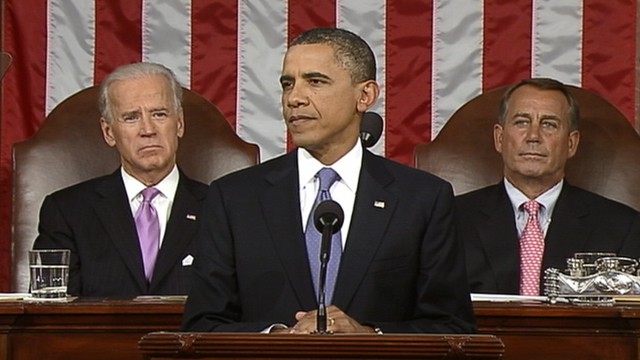
Last evening, President Obama addressed a joint meeting of Congress (here) with a rousing stump speech that introduced the "American Jobs Act."  Although greeted with the inevitable wave of skepticism and criticism from a goodly portion of the "chattering class" of political pundits, the speech represented the president at his rhetorical best.  The goal of the speech was, apparently, to get the attention of both Congress and the public, and the president didn't give details of the legislation itself.  A more detailed overview of the American Jobs Act can be found (here).

Most of the pundits do seem to agree that it was a good speech, that the president drew on his more passionate side, and that he did try to reach across the aisle with a jobs plan that draws on recovery strategies from both parties.   Only time will tell whether or not Congress can actually pass any meaningful legislation that tackles the ongoing recession and unemployment, but the ball is now squarely in its court.  We'll see.  In the meantime, well done, Mr. President.