We should maintain that if an interpretation of any word in any religion leads to disharmony and does not positively further the welfare of the many, then such an interpretation is to be regarded as wrong; that is, against the will of God, or as the working of Satan or Mara.

Buddhadasa Bikkhu, a Thai Buddhist Monk


Showing posts with label Lewis County. Show all posts

Wednesday, July 17, 2013

North Country Theology

The North Country (in blue)
Modern, Newtonian Christian theology begins with God and proceeds systematically from the divine to the mundane.  The human condition is an important downstream concern, but one that is somewhat distant from the headwaters of the Trinitarian Deity.  Modern theology is a book theology, a professional theology.

Postmodern theology begins with where the theologian is and proceeds from the human condition toward God. Place and people matter a good deal, and it is these things that determine the scope, direction, themes, and content of the theological enterprise.  Modern theology starts with God and works its way to humanity; postmodern theology starts with humanity and works back toward God.  In this mode, theology is black, feminine, Asian, tribal, African, and even Korean and Karen.  Postmodern theology is diverse and local.  It thinks a good deal about culture.

So, here is a fact:  54.3% of Lewis County, NY, falls under the category of "Forested/Wild."  And another fact: some 72% of the county's residents live in rural areas.  Many of those living in rural areas live in or near "Forested/Wild." Lewis County, as a part of New York's North Country, is also cold and snowy even in these days of global warming.  Summer comes late and is relatively cool.

These facts imply a theology.  North Country Theology.  The symbol of this theology is a sound, the sound of the loon haunting the darkening evenings of lakes and forest.  The Spirit blows across the lakes and forest in several guises from gentle almost motionless morning breezes to water lashing, tree bending storms.  It is a creation theology, a natural theology, a biological theology, an environmental theology.  It works from the "second book" of divine revelation, God's Creation.  It is not, so far as I know, a theology that has been written up, and I'm sure there aren't any seminary courses on it; but it already exists in places like Lewis County in the lives of faithful Christians who experience God in the "Forested/Wild."  North Country Theology.

Thursday, May 23, 2013

Like Beavers, We Build

Yesterday, I attended a meeting of over 100 individuals focused on the subject of homelessness in Lewis County, New York.  The great majority of those attending work either in government agencies or in non-governmental organizations (NGOs), and as I listened to speaker after speaker rattle off an array of acronyms and refer to arcane corners of federal and state legal codes, I realized that what I was participating in was not just a meeting.  Laid out before me was a culture—for me, a foreign culture that has invented its own language.  At points, I required a translator!  The keynote speaker drew an unusually large audience not because of his eloquence but because of his knowledge of this culture.  Over lunch members of this housing and homelessness culture exchanged business cards and engaged in some important discussions that strengthened the networks of the culture of those involved in housing and homelessness in the North country of New York.

Walk into a school, any school, and we walk into a culture.  The First Presbyterian Church of Lowville, New York, is most definitely a culture of its own.  Businesses are cultures.  Industries.  Branches of government.  Crime syndicates.  Prisons.  You name it.  It is a culture.

Beavers can't help themselves.  They build damns and lodges.  We build cultures—or, better, we create cultures.  And this drive to create them is built deeply within us.  We need and use culture to protect ourselves, put food on the table, obtain shelter and clothing, and fulfill our most basic human drives.  The so-called "tribal instinct" is an instinct to live together in communities that can exist only as integrated cultures that share a language, values, behaviors, skills, religion, and habits.  We don't just eat.  We create cuisines.  We go to Italian or Thai restaurants, savor particular Chinese or French dishes.

Sociologist speak of the "social construction of reality," a sociological doctrine that holds that we humans construct our own realities at every level.  I saw and participated in one such social construction of reality yesterday.  Central to it was the social construction of a culture to mediate its reality (the "reality" being all of the laws, agencies, and institutions dedicated to addressing issues of housing and homelessness).  Building cultures is what we do.  We can't help ourselves anymore than the beavers out on Beaver Lake can't help but build damns and lodges.  It's what we do.

Saturday, September 8, 2012

All Theology is Local

Sigurd Olson (1899-1980)
Tip O'Neill famously claimed that, "All politics is local."  We, that is, see national issues through the lens of what is happening around us and, to a degree, judge what is best for the nation by what we believe is best for our own community and family.  I'm not sure that we can say the same for our belief systems, our theologies, but we probably should.  If all theology is not local, it should be.  We do not experience God and do not understand God in the same way in the United States as do Christians in Thailand.  The Thai language and Thai society profoundly influence Thai theology.  By the same token, God walks the streets of Syracuse wearing a different mask from the one "she" wears on N. State St., Lowville.  There is, or at least there should be, a Lewis County theology.

Two sources one might turn to for insights into what Lewis County theology might look like are two Presbyterians, one deceased and one still living.  The first is Sigurd Olson, an author and environmentalist who was born in Wisconsin and lived most of his life in northern Minnesota ("Up North" as it is known there).  Out of his own experience, Olson came to see the North Country, the wilderness, as a spiritual reality that calls us back to our deepest roots.  The wilderness is a place for mystical experiences born out of the quiet of the deep woods, lakes, and loons.    (See, David Backes, "The Land Beyond the Rim: Sigurd Olson's Wilderness Theology").  Lewis County is partly wilderness, partly loons & lakes & forest, precisely the mystical land Olson wrote about.
Kathleen Norris

The second sources is Kathleen Norris, particularly her book, Dakota: A Spiritual Geography (2001).  (See my review here). Norris lived for some years in the small town of Lemmon, South Dakota, which is out on the high plains, and her book reflects on the spiritual impact of life in rural America and on the prairies.  Lowville is, of course, a very different place, and yet it is still small town America and has its own spiritual realities that parallel those of Lemmon.

Lewis County is rural farm country.  It is also North Country wilderness.  And it is out of these slices of reality that one might construct a Lewis County Theology.  Olson and Norris would be helpful in that happy task.  Amen.

Monday, August 6, 2012

Totem Poles & Missionaries: A Tale with no Ending

A few postings back, I reported on the sad destruction of a local Lewis County historical monument by a right-wing sect group.  The monument was to an early 19th century church located in the long abandoned community of Stow Square, NY, which was just up the road from the present town of Lowville.  The monument was in the shape of an obelisk, which this sect found offensive because thousands of years ago and thousands of miles from Lewis County the ancient Egyptians used obelisks as sacred pillars.

This kind of narrow, zealous, and unloving thinking has a long, "rich" history.  Another and much more important manifestation was the destruction of Pacific coast totem poles by 19th century missionaries who assumed without any study that the totem poles are elements of a false religion.  They amount to devil worship.  A website dedicated to totem poles, totempole.net, addresses this belief, writing (here),
Totem poles were never objects of worship; the association with "idol worship" was an idea from local Christian missionaries. The same assumption was made by certain early European explorers, but later explorers such as Jean-François de La Pérouse noted that: totem poles were never treated reverently; they seemed only occasionally to generate allusions or illustrate stories; and were usually left to rot in place when people abandoned a village.
Still, the missionaries tried to stamp out not only the use of totem poles but also the cultures that produced them.  And, evidently, they nearly succeeding.  Fortunately, however, according to an Al Jazeera report (see the video clip below), the art of making totem poles is experiencing a rebirth.


This revival of an ancient art is important from an artistic perspective and from a cultural one.  I know from personal experience with tribal folks in Southeast Asia that indigenous cultures give deep meaning to those who share in a local culture.  They find their identity in their language, cuisine, art, folkways, and beliefs. At the same time, exposure to the their culture enriches the lives of others.   All of this is one manifestation of God's creation of our world and us.  We are created to live in culture,  and the more of it, the greater diversity of it, the better.  Amen.

Tuesday, July 17, 2012

A Monumental Tragedy Revisited

Yesterday, I reported on the actions of a small sect group, located in Lewis County but led and funded by an Ohio-based group, which destroyed a historical monument dedicated to the memory of a church and community located at Stow Square, NY—a place that no longer exists except in memory.  This group owns the land on which the monument stood.  It was, legally, theirs to destroy.  And, in the larger scheme of things the loss of a humble, otherwise unremarkable bit of the past is insignificant—except to local residents who saw in the Stow Square Monument a piece of their own story.

The intention, willful destruction of the Stow Square Monument was above all else an act of physical violence, which exposes the violent core of radical right-wing religion.  The hard core religious right exists to impose its ideological version of the Christian faith on the rest of us, who are deemed to be "unbelievers".  It does not respect differences of thinking or conscience.  What does not conform to its standards, so-called, it must force to conform.  When it gains political power, thus, it is eager to use the coercive powers of government to force its dogma on the public.  What it does not agree with it demonizes, and what it demonizes it feels necessary to destroy.

Thus a harmless, humble, and obscure little historical monument unobtrusively located in a farmer's field is violently destroyed because it reminds these hard core right-wing religionists of ancient Egyptian cult objects.  The link is so tenuous as to be laughable, but for the violence with which it is made.

This group, led from outside of the county and funded from outside of the state, visited its violent ideology not just a piece of physical property.  It visited its violence on the memory of a church and community, long vanished.  It visited its violence on neighbors who cherished the monument as a link to their own past.  It visited its violence on other residents of Lewis County who also valued the Stow Square Monument as a witness to local history and a memorial to "those who went before".  It visited violence on the Christian message, which is a message of peace, reconciliation, and love ultimately defined by Jesus of Nazareth, the Christ and the Prince of Peace.  Perhaps most sadly of all, this small sect group has visited its violence on itself.  It is one of the central principles of the Christian faith that a good heart is its own reward and a violent one its own punishment.  The anger, anxiety, self-righteousness, arrogance, disrespect for others, and almost impressive lack of love for neighbor that went into this act reveals what truly lies in the hearts of its perpetrators.  Such a group will not prosper, not in true faith nor in loving service.  Amen.

Sunday, June 3, 2012

Lewis County Churches, 2000-2010

According to the Association of Religion Data Archive's (ARDA) data base for the churches of Lewis County, NY, (here) evangelical Protestants number 2,693 adherents (9.9% of the population), mainline Protestants number 2,155 (8.0%), Catholics number 6,443 (23.8%), and "unclaimed" number 15,681 (57.9%). There are also 115 individuals listed as "other".  This data is for 2010.  The United Methodist Church was the largest Protestant body with 1,242 members in 11 churches.  The Conservative Mennonite Conference had 1,005 adherents in 6 churches, and the Mennonite Church USA had 715 members in 3 churches.  The Presbyterian Church (USA) had 266 members in 2 churches.

The ARDA data base shows that between 2000 and 2010, the largest church in the county, the Catholic Church, lost 45.4% of its total adherents, and the second largest church, the United Methodist Church, lost 31.1% of its members.  Only the Mennonite Church USA recorded substantial growth, growing by 110.3% with the addition of two churches.  For the record, the two Presbyterian churches in Lewis County lost 37.6% of their members, more than a third.  The general decline in church membership was not, however, limited to the mainline churches.  Among the evangelical denominations, the Wesleyan Church lost 77.7% of its members in the ten years from 2000 to 2010 while the Assemblies of God church lost 61.2%.

Of all of these figures, the one that is most striking is the fact that nearly 60% of Lewis County is not "churched".  The county has a reputation for being one of New York's more conservative counties with many of its people worshipping on a Sunday morning.  The county may lean to the conservative, but involved in organized religion most of the county is not.  It is figures like these that should cause mainline folks to begin to think more seriously about evangelism.  IF the faith we profess is what we claim it to be—a better way to live one's life—then it is worthy of being shared, which is all evangelism is at its best.  Faith-sharing.  We can "do evangelism" in ways that are not obnoxious and really are a sharing of good news rather than an attempt to impose a religious ideology.  Given the data, it would seem that there is plenty of opportunity for that kind of faith-sharing in Lewis County.

Sunday, July 10, 2011

How Can This Be?

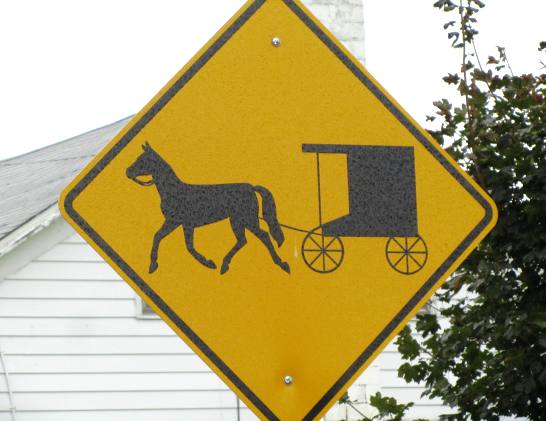
As noted in an earlier RPK posting (here), some of our very best neighbors here in Lewis County are Amish.  They add a great deal to the quality of our lives and detract from that quality in no ways that most of us can discern.  So, it comes as something of a surprise to learn that Amish immigrants don't always receive the welcome they have here.  Such is the case, evidently, in Schuyler County, Missouri, according to a news feature by Phillip O'Connor entitled, "Curiousity, criticism follow Amish in Midwest migration to Missouri."  Soon after the first Amish settled in the county, rumors began to circulate that they "hated government, didn't pay taxes, and wouldn't fight in a war."  They are not, that is, loyal and patriotic Americans.  There were other uglier rumors as well.  Others continue down to the present to criticize the way the Amish raise their children, supposedly make women work too hard, and refuse to use electricity.

In other areas of New York as well, the Amish have fallen foul of local codes and people object to horse manure on their streets and roads.  Sometimes, according to one survey of the Amish in New York (here), these differences have ended up in court.  It is the most conservative Amish groups that often have these problems.  Still, the Amish living in the Lowville area are reputed to be one of the more conservative groups, and there still is little complaint if any about them.

It's hard to believe, in fact, that anyone could object to the Amish in the ways described above.  While it is true that some Amish are somewhat stand-offish and many are apparently shy, others are easy to chat with and happy to sit and talk a spell.  And, frankly, they contribute to the cultural richness and diversity of places that are otherwise a bit monochrome when it comes to such things.  Sure, the rest of us have to meet them half-way or even a little more on some things, but there's far more good than harm that comes of it.  The practice of kindness is its own reward especially with neighbors such as the Amish who themselves provoke little else but kindness.

Wednesday, June 29, 2011

Amish Insights

The Amish buggy has become a common sight in and around Lowville, and the Amish themselves are a growing presence as they buy up farms one after another.  They are good neighbors, and local officials credit them with "saving the family farm" in Lewis County.  They offer a variety of services while draining virtually none of the tax payers' dollars.  But, one often wonders how they decide which technologies to reject and which to embrace.  CNN recently posted an informative interview with Eric Brende, who with his wife, Mary, lived for a year with the Amish.  The interview answers some of the questions you might have about the Amish, technology, and how they decide things. You can access the interview (here).

P.S. For some basic information on the Lewis County Amish see the Mayville, New York, section of the Amish America website (here).