Tuesday, April 10, 2012
Those Who Refused (Mark 4:10-12)
A new posting in the Mark series at Rom Phra Khun Bible, this one looking again at the very beginnings of the earliest church.

Monday, April 9, 2012
God as an Agent in History

From Genesis through to Revelation, the problem posed in scripture is God's troubled relationship with a free humanity, which persists in abusing its freedom and God's creation. Far from controlling everything, the biblical God is portrayed as a sovereign in search of a kingdom. The Christian understanding of sin (rebellion against God) makes no sense if God controls "everything that happens in the world."
Indeed, from a philosophical and logical point of view, what would be the point of creation if God controls everything that happens? If that were so, God is necessarily the perpetrator of every suffering, injustice, and evil that ever has been or ever will be. If God controls everything, then every action we take is justified because it is caused by God. Now, some more subtle believers in this doctrine will say that God has given humanity free will, but God is still in control. God sets boundaries on free will and can withdraw free will at any time, and "he" who can withdraw a thing controls that thing. This subtlety gets us nowhere. It still leaves God being responsible for every action of every human being. In this scenario, free will is still contingent on divine consent, which is the free will of a dog on a leash not an eagle soaring in the wind.
In scripture, by way of contrast, God created humanity with the possibility of unbounded freedom, and humanity broke free from its leash to claim that freedom—at the price of the loss of Eden. And in our own experience as a race, we know that we are more than just our genetic coding. We are more than just our cultural heritage. We know that individually and together we have the power to construct our own social and cultural realities. Evolution is a process that is both free and constrained at the same time—constrained by a set of unbending principles and processes that define the rules by which we play the evolutionary game. Life as we know it is thus free and constrained all at the same time, but constraint by the boundaries of our created nature is different from being controlled by God. God, to draw on a sports analogy, created the playing field and the rules by which the game is played, but God does not determine who wins and loses. We are free to play the game for ourselves. The problem addressed in scripture is this: we don't play fair. We are free, and God is not in control.
Sunday, April 8, 2012
From Herb’s Desk

Skeptics doubt that there ever was a bodily resurrection of Jesus, mostly because such things “just don’t happen.” Easter, for them, is a sham and a scam. In the church, we see things differently. We express confidence in Easter for several reasons. First, we have four eyewitness accounts all confirming “something happened” and that Jesus’ disciples saw him risen from the dead. The followers of Jesus insisted they had seen him. The skeptics remain, of course, skeptical. Maybe the disciples made up the whole thing or, maybe, they experience some kind of mass psychosis. OK, but then there’s a second point that makes us pause. After Jesus’ death, it is clear that the disciples were discouraged and hopeless. Yet, within weeks they were boldly proclaiming the risen Lord and convincing others that Jesus was risen. Something happened, that’s for sure. And, whatever it was, it was not simply a mass psychotic episode (itself highly unlikely) because residents of the small city of Jerusalem joined up. They, too, became convinced that Something Happened.
The third reason we are confident in the Resurrection is that Christians in every generation have felt its power in their own lives. It gives hope to those trapped in hopeless situations. It heals those in need of healing. Generations of Christians have felt the power of the Spirit in their own lives, giving them richer lives. Generations of Christians have given themselves in service to others, sharing the hope and healing of the Cross with the world. The power for good of the Christian movement for two thousand years is witness to the power of the Resurrection and confirmation that indeed Something Happened after Jesus of Nazareth was crucified, dead and buried.
The thing is that Something keeps on Happening. Easter thus is not just the celebration of a 2000 year-old miracle. It is an experience that we celebrate at First Presbyterian Church, Lowville, every Sunday morning of the year. Blessings in this Easter Season! Herb
Saturday, April 7, 2012
Happy Birthday, RPK
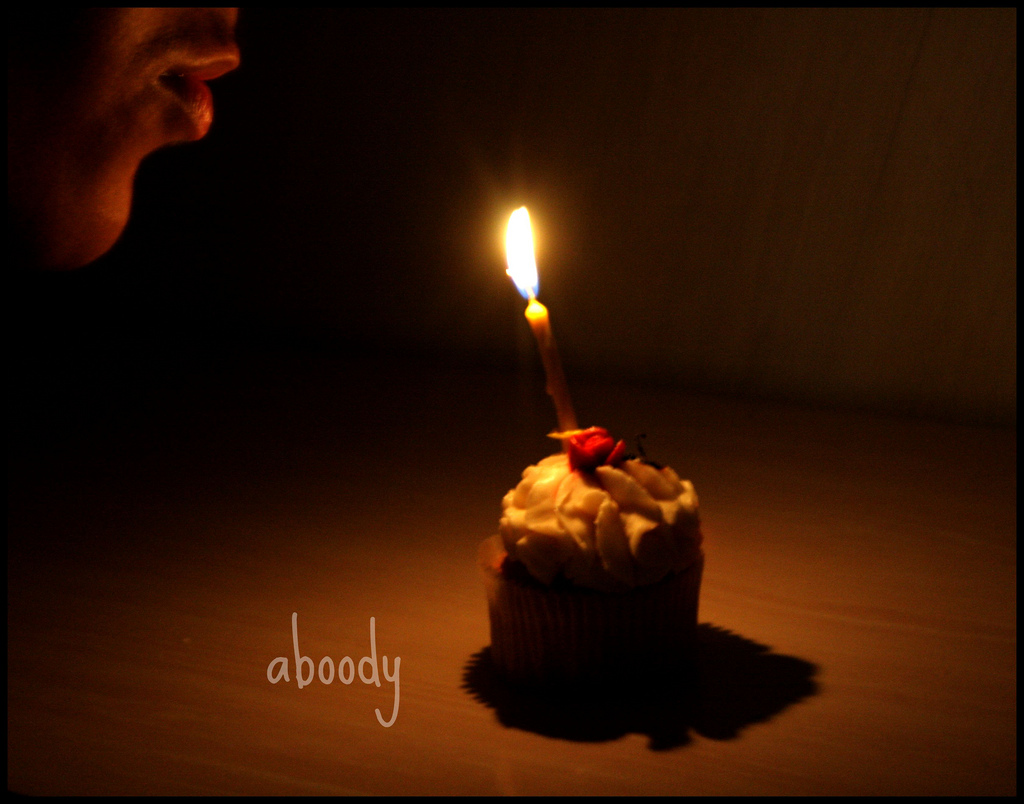 Today marks one year of Rom Phra Khun postings. Time flies. In some ways, I've come full circle. In the beginning, RPK started out giving a good deal of attention to the question of the relationship of science to religion, and you may have noticed that recent postings have gone back to that focus. There has been a shift, however, from the debate about the science-religion relationship to spending more time exploring the value of science for faith and theological reflection. I didn't share it with you here then, but fairly early on last year I ran into one of the so-called "new atheists" who turned out to be a cyber-bully. What looked like it might be a dialogue turned quickly sour. But it was a good experience in one way, because it taught me rather forcefully that debating about the relationship between science and religion is pretty much a waste of time. We in the church have much to learn from science, and it is time to get on with the learning and leave the debate to the biblical and scientist literalists (who prove the idea that extremes tend to converge). In any event, now that I have moved the Mark series over to Rom Phra Khun Bible my attention here has returned in part at least to the vital theological task of learning from modern learning.
Of course, my progressive political orientation leaks out now and again. Readers get enough of that elsewhere, and I am trying to keep it to a minimum here. Sometimes, however, I just can't help myself! And issues concerning church renewal have obviously been another theme this year. Many of the pastors who have a blog use their blog to augment their own pastoral ministry. I have to confess, especially to parishioners who may read RPK from time to time, that I haven't done that. RPK is an opportunity to go back in a sense to my previous life as a research historian who enjoys playing with ideas and trolling for interesting thoughts. Still, I trust that things I chew on here will be of benefit to the church I serve as well as to other readers. RPK has averaged about a thousand visits a month, which is tiny by Web standards but feels comfortable to a small-town preacher who is content with being just that. So, here we go into year two!
Peace, Herb
Go to Church or Else!
 This image, which I came across at Briantrapp.com, is just too good to pass up. According to Trapp, t is located on I-65 near Montgomery, Alabama. Sometimes a picture is worth even more than a thousand words.
Trapped in Paradox (Mark 4:10-12)
A new posting in the Mark series at Rom Phra Khun Bible, which wrestles with the meaning of incarnation, that is how God became a man and had to contend with the paradoxical nature of human life.
Friday, April 6, 2012
The Book of Nature & Science
 |
| Jonathan Haidt |
A guest posting at CNN by psychologist and self-described atheist Dr. Jonathan Haidt gives further witness to this movement. His posting is entitled, "Why we love to lose ourselves in religion," and it describes the role of organized religion in encouraging us to have transcendent experiences. Haidt has dedicated his life to studying morality, which led him to the further study of such experiences. In the course of his research, he had found that religions are particularly adept at encouraging their adherents to have experiences of the transcendent, whether it be through meditation, worship, or times of inter-personal interaction. He believes that religion is a part of our evolutionary heritage and writes, "Whether or not you believe in God, religions accomplish something miraculous: They turn large numbers of people who are not kin into a group that is able to work together, trust each other, and help each other. They are living embodiments of e pluribus unum (From many, one)."
It is not clear what Haidt means when he calls himself an "atheist," but often atheists scientists reject traditional ways of thinking about a supreme being. Some identify "God" with what they consider to be objectionable beliefs about God while others reject the idea of any kind of ultimate being entirely. For those of us who happily wear the label "theist," the findings of researchers such as Haidt only add to our sense that there is Something going on in the universe that is ultimate and real. There is a Presence that is both infinitely Beyond and intimately Present and that Haid's research reveals something of the reality of that Presence. It is, of course, a "leap of faith" for us to then equate our own faith tradition with that Presence and to use our word, God, for it.
The thing is, the more the scientists dig into reality in its various manifestations, the more they are drawn back to the role of religion in life and to using language that is almost theological. They are drawn to spiritual realities that keep pointing to a deeper and greater Spirit, which the theistic religions have long known as the Holy Spirit. We can't deny that we do make a leap of faith from the findings of science to our theological inheritance as Christians, but the more we learn about the "real" world the more sense our leap makes.
Thursday, April 5, 2012
The Very Beginning of the Beginning (Mark 4:10-12)
A new posting in the Mark series at Rom Phra Khun Bible. This one speculates that the roots of the earliest church can be found in Jesus' failure to communicate his teachings to the public at large. It's worth a look.
Wednesday, April 4, 2012
Eight-Bit Church
 |
| FPC, Lowville, from Google Maps |
The image is a metaphor, a powerful one. It is not clear where it will lead or what it will look like, but if churches like FPC, Lowville, are going to have a meaningful presence in the rest of the 21st century, they need to become virtual, 8-bit churches living in a digital universe. Every generation of the followers of Christ is called upon to reinvent the Christian faith and the church, but not since ancient times has that task been so challenging, so daunting, and so potentially exciting.
The thing is not that many churches, as a percentage of the whole, seem to be taking on the challenge or even thinking about it. Most continue to do things mostly as they have done them for many decades. When I was searching for a new congregation a couple of years ago, one search committee that I interviewed with was most concerned about whether or not I would wear robes in the pulpit and why I don't use the lectionary. It was a typical mainline church, that is declining in attendance, giving, and vitality—and clearly not a church prepared to live in the digital age.
Tuesday, April 3, 2012
Always Inviting Us
If we always rush, achieve, grasp, or fill the hours with mindless busy-ness, how shall we hear the still small voice of our loving Creator who is always inviting us to fullness of life?
Elizabeth Canham
Source: Heart Whispers
From : inward/outward
Subscribe to:
Posts (Atom)